
Dubuque Physical Therapy | Sports & Orthopedic PT

Making the turn: Heading into the the back nine of the golf season

Written by Jeff Eisel, PT, DPT

As we swing into the latter half of the golf season, some of us may be feeling the effects that come with efforts to improve our game. The asymmetrical and repetitive stresses that come with excessive practice and play can lead to a multitude of ailments from head to toe. While golf-related injuries may include any part of the body, many researchers agree that gradual onset of low back pain is the most common golf injury. This is not surprising considering the high velocity rotation during downswing combined with a lumbar spinal compression load of up to 8 times the golfers body weight1.

Whether it’s the low back, hips, shoulders, or elbows; awareness in a few keys areas can help reduce the aches and pains that may be limiting your best swing. PTs are NOT golf instructors but optimizing posture, mobility, and strength with your game will help keep you on the right course. Keep these tips in mind to prevent injury.

Posture
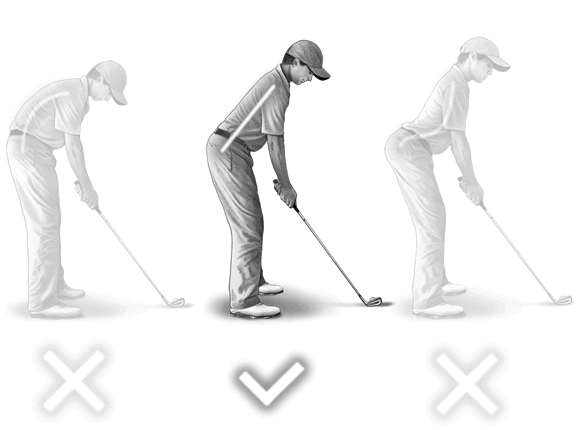
A proper address is key to any golf swing but as we age, many of us start to get to the ball from our spine rather than through the legs. This can be due to weakness through the core and legs, or from stiffness throughout the spine. Ideally, we want to be in a “spine neutral” position so as to maximize the spine’s ability to rotate and reduce stress on the low back. In order to attain and maintain this posture, both joint mobility and strength to control the movement are needed.

Mobility

Warm up! A repetitive theme that helps prepare the body for upcoming activity. Be sure to incorporate stretches for the shoulders, hips, and spine to prepare for the activity ahead. Check out our Golf Warm Up video from earlier this summer for some of our favorites. Mobility limitations may be due to soft tissue restrictions or tight muscles but they may also be from stiff joints.

Limitations in L hip internal rotation or a stiff thoracic spine for example, may be limiting the ability to follow through on the ball after contact, thus contributing to a right handed slice. While your golf pro can help with the specifics of your swing, optimizing soft tissue extensibility and joint mobility is something that we PTs are here to help with.

Strength

It’s been said that the glutes are the king of the golf swing. Without a strong, stable base, trying to launch a drive can be like firing a cannon from a canoe. Strength deficits in the glutes increase stresses on the core and upper extremities. A weak base also means you are likely sacrificing distance and accuracy. Another fault weak glutes can contribute to is “standing up” at contact which increases stresses on the low back and can cause issues at the elbows. Core strength is needed to maintain a neutral spine throughout the swing and also prevents “standing up” at contact. These are just a few examples of how strength deficits can limit your ability to complete a pain free, consistent golf swing.

As PTs, we can help tailor a strengthening program appropriate for your specific needs. 

With the days growing shorter, we all want to make that late season push to end on a high note. While physical therapists cannot advise on how to lower your handicap (get with one of Dubuque’s awesome local golf pros for that), we can help target a specific, multi-tiered approach to ensure not only a pain free wrap-up of the golf season, but also the confidence to “take dead aim” and swing away.

See you out there. 

Citation 1: McHardy A, Pollard H, Luo K, Golf injuries: a review of the literature. Sports Med. 2006;36(2):171-87. (PubMed) (Google Scholar)

Returning to Activity After a Pandemic

(Used with permission from The American Physical Therapy Association, July 2021)

During the COVID-19 pandemic, activity levels dropped for a lot of people. Between stay at
home orders, gym closures and working from home, people became more sedentary. On top of
that, there were shortages of equipment like dumbbells and bicycles, making staying active at
home difficult even if you wanted to.

But this summer, things look different; vaccines are widely available, restrictions are loosening
and people are looking to get active and enjoy the warm weather. That’s all good news, but if
you had a long break from activity, your body might not be ready to jump right back in. Here
are a few tips to help you get more active without getting hurt:

Start Slow

If you’re a runner, think about a walk to run program
If you’re a weight lifter, start with lighter weights and less reps.
● Whatever your activity of choice is, start with short periods of activity and gradually
work your way back up.

Warm Up and Cool Down

Warming up gets your heart and lungs ramped up and prepares your muscles and tendons for
the increase in activity about to come. Include some light cardio like jogging, calisthenics, or
cycling, followed by active stretching like butt kicks, high knees, or yoga.

Cooling down transitions your body back to a lower state of stress – it brings your heart rate and
breathing down, decreases blood flow to your muscles and back to places like your digestive
system, and helps you relax. It’s also a great place for static stretches if you need some work on
your flexibility.

Take A Day Off

Rest days let your body recover and keep you from getting burned out. Not enough exercise
isn’t good for you, but too much of a good thing can cause problems too.

Watch for early signs of injury

Some soreness for a few days after activity is normal, especially if you’ve had a long break. But
there are a few common issues to watch out for as you return to activity:
Swelling or bruising
Joint pain, especially in the knees or shoulders
Foot pain, which could be a sign of plantar fasciitis
Muscle strains – particularly common in the hamstrings
Sprains – most common in the ankle

Any of these issues justifies a call to your physical therapist. Getting checked out early can
prevent an injury that derails your attempt to return to activity. PTs see all of the issues just
mentioned on a regular basis and can help safely guide you back into a more active lifestyle.

Running
Use It and Improve it!
Written by Anne Kruse, PT, DPT, Therapeutic Pain Specialist, Cert. MDT

As I reflect on my own physical fitness over the years I am amazed at how true what I learned years ago in school really is. One of the phrases I have heard and now use is:

“If you don’t use it, you lose it.”

I distinctly recall the first time I found this phrase applied to me. During my first year of PT school I had settled into a routine of little to no exercise. The following summer a friend asked me to run the Bix 7 Road Race with her. I thought, “Sure, I was on the track team in high school and ran some in college, this will be fun.”

Little did I realize how completely out of shape I had become and the seven mile race was absolutely brutal. I must confess I walked the majority of it. That was a wake up call and I began to make a concerted effort to exercise a few times a week; walking with friends after class, playing an occasional game of racquetball, lifting weights, etc.

Why Not Me?

Fast forward to the spring of 2018. As my husband and I sat in the stands of Drake stadium watching our sons compete in the Drake Relays, I had another awakening. I was amazed as I watched an elderly gentleman take to the track and compete in the Masters 800. While his time didn’t break any records, he was out there doing it and clearly having fun. Yet again I had become too busy in my own life to exercise regularly, and yet this is what I teach people every day. With the support of my family and friends, I returned to running, ugly as it was. I found it challenging to even run a half mile initially, but have grown to really appreciate running as a means of exercising, relaxing, and spending time with my family and friends.

Why do I share this tale?

Because we are all human and have times in our lives when our own wellness plans get derailed. But fortunately, as humans, we also have an amazing ability to improve our wellness. In recent years I have learned the phrase, “Use it and improve it” and this holds true with all of our bodily systems.

What Does the Research Say?

In 1966, the Dallas Bed Rest and Training Study was conducted in which five healthy 20 year old male volunteers were recruited to spend the summer in bed. The cardiovascular fitness levels of the participants was measured before beginning the study.

After just three weeks in bed, without any weight bearing activity, the participants were found to have had such significant declines in their cardiovascular fitness that the bed rest was stopped.

On average the participants had a:

  • 27% decline in their ability to absorb and use oxygen
  • 26% decline in the amount of blood their hearts could pump through their bodies in a minute
  • 35 point increase in heart rate during a submaximal workout

To complete the study, the participants were taken through an eight week workout program.

  • 45% increase in their ability to use oxygen
  • 40% increase in the amount of blood their hearts pumped through their bodies in a minute
  • 49 point decrease in heart rate with a submaximal workout
Hmm, working out improved their heart and vascular system function to better than they were before the study.

But wait, there is more!

The same five participants were studied 30 years later (1996). Only two had continued to exercise and all had gained weight and body fat. At baseline it was found they on average had only declined 12% in their ability to absorb and use oxygen.

Thus, three weeks of bed rest at age 20 was more detrimental to their cardiovascular fitness than 30 years of aging.

Compared to the original study, there was no bed rest, but a training program was begun. In 1996 the training was less intense and involved walking, jogging and cycling over a period of six months instead of eight weeks based on the age of the participants and to reduce the risk of injury. After the training program, the participants had improved their ability to absorb and use oxygen by 14% to similar levels attained in the 1966 study.

Wow! Ok, but why do I care?

So, the take home point is this: no matter where you find yourself in life, it is important to your health to move. Whatever you choose to do, be it walk, jog, bike, or swim, have fun and realize you are helping to reverse the effects of inactivity and aging and are improving your cardiovascular fitness. If you find yourself needing some guidance, consult your physician, PT or personal trainer.

Now get out there and “Use it and improve it!”