Dubuque Physical Therapy | Sports & Orthopedic PT

Elevate Your Heart Rate With Physical Therapy

(Used with permission from the Private Practice Section of the American Physical Therapy Association)

Heart disease is a leading cause of death and disability.

This shouldn’t be a surprise – it’s been at the top of the list for years. You know that taking care of your heart is important. That means doing things like eating right, avoiding smoking, and exercising regularly. While all of those things can be difficult, today we’re going to focus on exercise.

How Physical Therapy Can Help With Your Heart Health

Cardiovascular exercise is anything that makes you breathe harder and your heart pump faster. That could be walking, running, dancing, biking, swimming or hiking. It strengthens your heart and blood vessels. It can help control weight, lower blood pressure, reduce stress, and prevent heart disease.

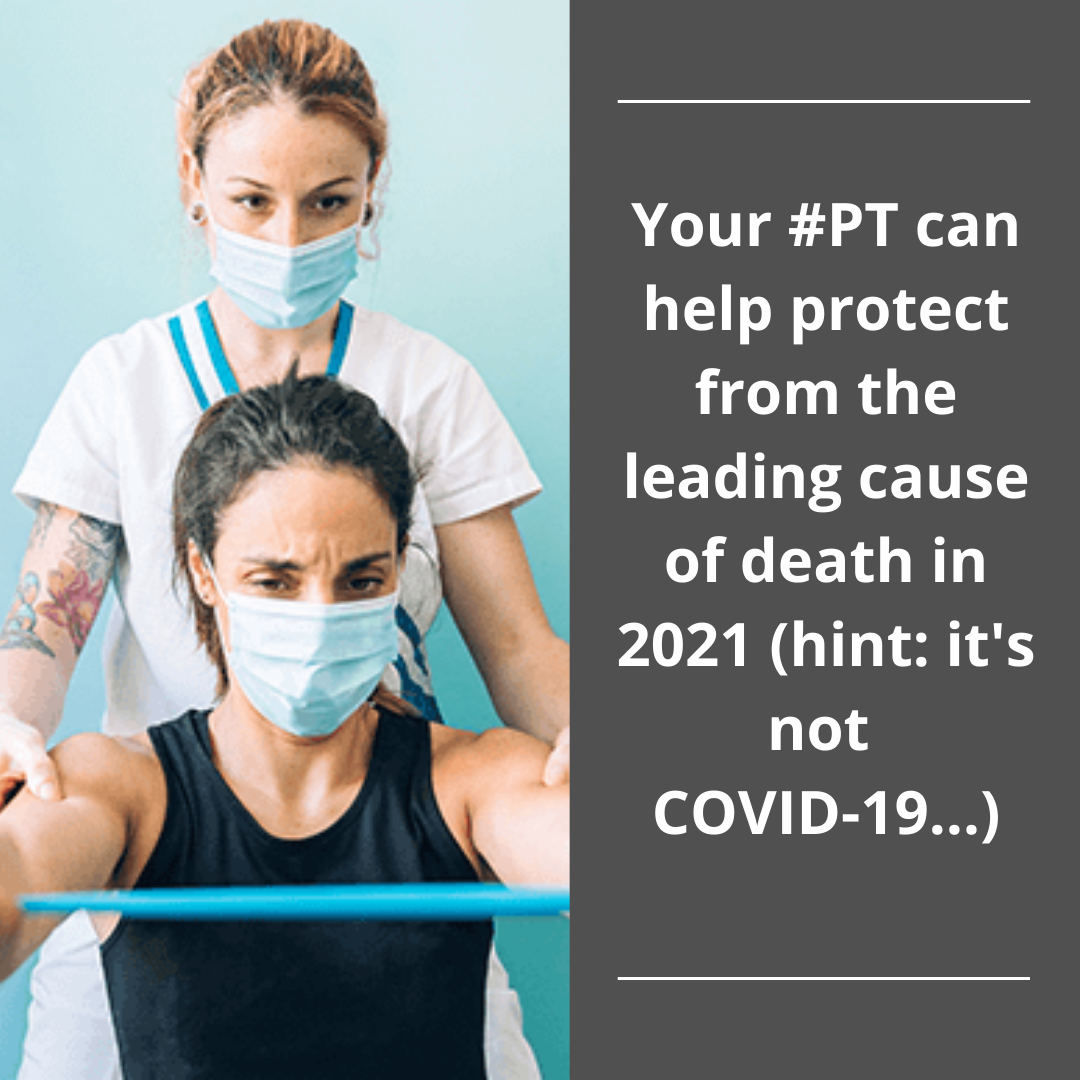
If you’re regularly going for a run or swimming laps, you don’t need help from your PT. But 3 out of 4 adults aren’t exercising regularly. If you’d like to get started, your PT may be just the person to help you. It’s not uncommon to get injured, then never get back to your old routine. Your PT can help you deal with the old injury and design a plan to get you safely back to regular activity.

It’s also not uncommon to try to be more active on your own, only to stir up pain somewhere like your back, hip, knee or shoulder. Your PT can help with that too. They’ll figure out why you’re having pain, help you correct it, and get you a plan to reach your goals.

Physical therapists can also help you safely increase your activity levels after major medical issues like a heart attack, stroke, or even cancer. Recent research has shown improvements in cardiovascular fitness, fatigue levels and even pain in cancer patients who participate in a personalized physical fitness plan from a PT.

Whatever your barriers to physical activity are, your PT can likely help you overcome them. As movement experts, physical therapists are trained to deal with a variety of conditions. They’ll help you work around whatever issues you have so you can safely elevate your heart rate and keep cardiovascular disease away.

How Exercise Can Benefit Your Mental Health

Written by Amanda Edwards, PT, DPT, CSCS

We often read about the physical benefits of exercise, but we overlook the importance of what exercise can do for our brain as well. In this post, we will dive in on how exercise can improve your mood, quality of life and how to implement it into your daily routine.

Improves anxiety, stress, and depression

A numerous amount of evidence has demonstrated that exercise may improve our mood, alertness, concentration and even our sleep patterns. In 2019, an analysis out of King’s College in London examined over 40 studies that followed more than 267,000 people who participated in regular physical activity. They found that regular physical activity decreased the chances that someone would experience depression by anywhere from 17% to 41%. This was found in all ages, genders, and various modes of exercise.


Quality of Life

Participating with a partner or a group allows you to connect with others with the same interests. Research has shown that isolation can contribute to depression and anxiety. Exercising with a group of people promotes connection and belonging. You are also more likely to stick with in exercise routine if someone else is holding you accountable to join them.

How much is enough?

According to the National Institute of Health (NIH), we see improvements in depression and anxiety if we exercise at least 150 minutes/week or just 75 minutes of vigorous activity per week.

The Great Outdoors

Studies have indicated the exposure to nature may increase your attention, lower stress and improve your mood. It has also been linked to decreasing risk of psychiatric disorders. Feeling connected to nature can produce similar benefits of well-being, regardless of how much time is spent outdoors. In a research study in Japan, scientists took hundreds of people on walking tours in a forest and measured a variety of bioindicators in the participants related to stress. It was found that being out in the forest (compared to urban walks) can significantly reduce stress levels and decreased both blood pressure and heart rate. Our area has so many great areas to get out in nature, check out a complete list HERE.

How To Start

  1. Find an activity you enjoy! Whether it’s going a on a hike with a friend or participating in a workout class with a large group of people, make sure
    you ENJOY the activity. This will allow you to be more compliant with exercising.
  2. Start SMALL. If you are new to exercise, start with something that is a short time commitment and slowly build from there. If you are new to exercise, starting a program that requires a major time commitment can be overwhelming, unenjoyable and you are more likely not to stick with it.
  3. Find a group of people, a fitness center, or a personal trainer to find what program would be best for you. Not ready to start with a group? There are many apps/training devices out there. One that it user friendly and free is the Nike Training app, which is great for beginners along with advanced athletes looking to get a cardio or strength workout in.

Exercise is one tool to help improve your mental health. It is not a substitute if you need professional help. It is always a good idea to seek advice from your primary care provider or mental health professional prior to starting a new exercise program.

Concussions Happen, PT Can Help

Written by Brad Kruse, PT, DPT, SCS, CSCS, Cert DN

Concussions happen. 

When people talk about concussions, the first thing that comes to mind is a sport related injury.  While those who play football or hockey see the highest incidence of this type of injury, the rate of concussions in other sports like soccer are not far behind.  At Dubuque Physical Therapy, we have worked with patients who have had a concussion while participating in swimming, and in golf, as well as people who were injured at work or who slipped and experienced a fall. 

A concussion is a mild traumatic brain injury (mTBI).  

Concussions Happen, PT Can Help

Anyone, at just about any age, can have a concussion. Concussion symptoms can sometimes be missed, particularly when they follow a non-sport related incident.  This type of injury generally is the result of the brain moving around within the skull and often coming into contact with the inside of the skull.  A direct blow to the head can be the cause, but a concussion can also occur with no direct contact to the head.  A blow to the body that results in the head moving or stopping quickly can result in what is called an impulse mechanism of injury.  In either case, there is a change in brain function that results in altered brain and neural function.

Concussion Symptoms Vary

The forces involved in a concussion impact many systems in the body.  While there is a wide range of symptoms that can be present following a concussion, among the most common symptoms are:

Concussions Happen, PT Can Help
  •  headache
  • dizziness/lightheadedness
  • nausea
  • sensitivity to light or noise
  • mental impairments such as difficulty with concentration or retention of information. 

The vast majority of concussions resolve relatively quickly.  In adults, about 75% of those with a concussion recover within a week, and 90+% of concussion related symptoms resolve within the first 2 weeks. In teenagers or younger individuals, the recovery time is typically longer.  Most of our younger population with a concussion recover within 2 weeks, and 85% of symptoms resolve within 4 weeks.

Physical therapists can help guide a person through the concussion recovery process.  This recovery process includes the return to mental as well as physical activity.  A school aged individual needs to tolerate being in the classroom before we worry about a return to athletic activities.  An adult may need to work through the recovery process in order to return to work.  Mental/cognitive issues can be treated in a similar fashion to physical limitations, with the prescription of specific activities or exercises from your PT.

Persistent Post-Concussion Symptoms

Persistent post-concussion symptoms, those that linger for more than 2 weeks in adults, and 2-4 weeks in younger individuals, can be subdivided into various categories.

  • Symptoms such as a headache or dizziness can be cervicogenic in nature, meaning some dysfunction in the cervical spine (neck) is contributing to the problem.
  • Dizziness, ringing in the ears and vision related problems can be related to the vestibular system (helps with balance and the brain’s ability to determine the position of the body), or the ocular system (eyes).
  • Another common subgroup of persistent concussion related symptoms relates to the cardiovascular system.  Heart rate and blood pressure changes can trigger post-concussion symptoms.

Research shows us that simply resting and completely avoiding exercise or mental activity does not help the recovery process. 

Research shows us that simply resting and completely avoiding exercise or mental activity does not help the recovery process. 

Instead, a specific process that gradually increases the intensity and duration of the offending task(s) leads to a faster resolution of symptoms.  Every person and their individual circumstances are unique, just as every concussion is unique.  Recovery from persistent post-concussion symptoms can be bolstered by having a physical therapist as part of the health care team involved in an individual’s recovery.

The expert physical therapists at Dubuque Physical Therapy are trained to assess which components are contributing to post-concussion symptoms.  We will then work with you, and in coordination with your physician or health care provider and your school or employer, to develop an individual plan for recovery.

When a concussion happens, Dubuque Physical Therapy can help!

Written by Brad Kruse, PT, DPT, SCS, CSCS, Cert DN

Physical Therapist and Sports Clinical Specialist

Dubuque Physical Therapy