Dubuque Physical Therapy | Sports & Orthopedic PT

Overcoming-a-Sedentary-Lifestyle
Overcoming a Sedentary Lifestyle Doesn’t Have To Be Hard!

It’s true that finding time to workout during the day can be difficult at times from your sedentary lifestyle. You work for 8 hours a day, commute home, drive your kids to their activities, cook supper, get ready for bed…it feels like there aren’t enough hours in the day to get the physical activity you desire!

For many people, exercise appears to be an all-or-nothing proposition. Finding the time and energy to do so can be tough, but fortunately, there are a number of simple methods to include physical activity into your everyday routine without having to go to the gym or schedule a session.

Dubuque Physical Therapy has put together a list of ways you can easily increase your physical activity. Keep reading to learn more, and give us a call at our clinic to schedule an appointment for a tune-up with us!

7 ways you can get in better shape without heading to the gym

1. Do chores – but stretch while you’re doing that!

By doing chores and daily tasks for 20 or 30 minutes a day, you can live a cleaner and healthier lifestyle. In addition, you can get some exercise! Vacuuming, dishwashing, trash removal, and laundry all necessitate physical movement.

You may get exercise while also doing the housework you’ve been putting off if you take time out of your day to accomplish duties around the house. It’s a win-win situation!

2. Stand up and move around.

Simply standing in place may be one of the simplest methods to get some exercise. While it may not appear to make a difference, standing is far healthier than sitting. Standing burns more calories and is better for your posture because it reduces your capacity to slouch or hunch over. It also induces more exercise and helps to keep blood sugar levels stable after a meal.

3. Take the stairs and park far away from entrances.

We all want to move from one place to another as quickly as possible. We use elevators, park near entrances, and enter and exit through the closest doors… But, except for saving a small bit of time, this adds no long-term value. Make it a habit to take the stairs at work or park in the back of the parking lot at your grocery store. These simple actions can greatly increase your daily physical activity.

4. Find excuses to walk.

We all get a lunch break, and we can take use of it to make healthy choices. Instead of dining at the office cafeteria, order food from a restaurant down the street (and make sure it’s nutritious!) Alternatively, you can spend your entire lunch break walking or going to the gym.

You can bring a sack lunch and eat it at your desk before or after your workout if you choose this option. This will allow you to set aside time each day for physical activity.

5. Hang your workout equipment in plain sight.

By keeping your equipment in sight, it’ll increase the probability of you using them (because let’s face it, who’s going to rummage through their hall closet to find their yoga mat at the end of the day?)

So, keep workout equipment in an easy-to-see view around the house. Put your yoga mat beside the tv. Store your 5-pound weights on the side of the desk. Make it a habit of working out around the house while doing your daily activities, such as watching the news, cooking dinner, or even sitting at your computer.

6. Be sneaky!

Ideally, we’re supposed to get up and move around every 30-60 minutes throughout the day to initiate stronger blood flow, and to allow our bodies to stretch and warm up. But how many of us actually do that? (The answer – not many.) However, you can achieve this by tricking yourself into getting up more often.

Perhaps you drink your water from a smaller glass than normal, forcing you to get up and go to the sink every time you complete it. Alternatively, instead of having your own stapler or hole puncher on your desk, you go to the copy room every time you need one. You’ll be able to get up and walk around far more than you would otherwise if you get rid of these minor “conveniences” that we make for ourselves.

7. Give our clinic a call for more advice!

If you’d like more assistance on how to get yourself moving, don’t hesitate to contact us today.

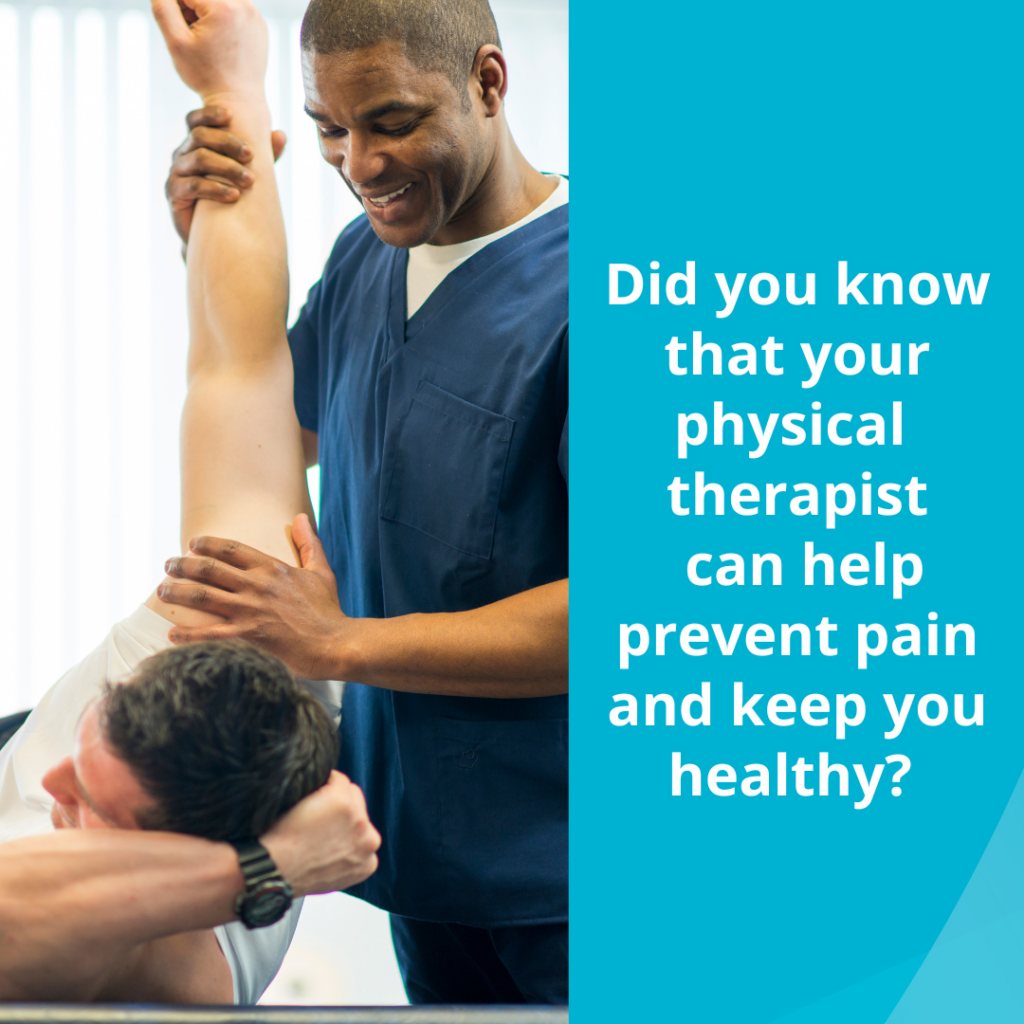
Your physical therapist can provide you with a personalized workout plan to help get you moving in the ways you want. If pain is an issue, he or she can also provide you with pain relief methods and techniques. Physical therapy are movement experts, so they are great resources to utilize when looking to achieve physical goals.

We’re here to support you on your fitness journey!

Do you have pain that prevents you from participating in as much exercise as you’d like? Do you want a more systematic strategy to incorporate physical activity into your daily routine? Do you have no idea where to start?

Physical therapy can help you enhance your physical activity and achieve your goals, whatever the situation may be. We’ll devise a strategy to assist you in increasing your physical activity as quickly as we can so call us today!

Sources:
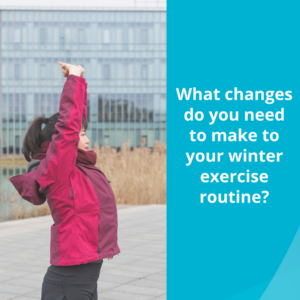
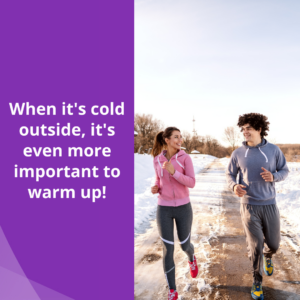
Cold Weather Makes Warm Ups Even More Important!

(used with permission by the APTA Private Practice Section)

Warm ups are always important. They gradually raise your heart rate, and get you breathing a little faster. This sends more oxygen, energy, and nutrients to your heart, lungs, and muscles so they can perform at their best. Warm ups also get the aerobic energy system started, which takes several minutes. Getting it going before your activity also helps you perform better.

What’s different in the cold?

Our bodies have a few tricks to stay warm in the cold. One of these is to narrow the blood vessels closest to the skin. That means that the more superficial muscles get less blood flow, making them more likely to be injured if you place too much demand on them before they’re ready. The restriction in the blood vessels also makes your heart work harder. This doesn’t mean you can’t be active in the cold, it just means that you should take a little more time to get your body ready.

How to warm up

  • Start with something to raise your heart rate, maybe a brisk walk or light jog.
  • Follow that with a dynamic warm up like walking or jogging while pulling your knees up high to your chest.
  • Some high front kicks with straight knees will loosen your hamstrings.
  • Walking lunges with an upper body twist will get your whole body moving.

Your warm up should match the activity you have planned. If you’re not sure how it should look, ask your physical therapist!

Consider your clothes

Dress in layers so you can adjust your clothing to your activity level. After you warm up, you might want to take off a layer to avoid getting too hot during your main activity. You can always add layers back when your activity level drops or the temperature changes.

Even though it’s cold, cool down

We know it’s tempting to rush inside to a warm blanket and hot drink, but don’t skip the cool down. Keep moving with a walk or another form of active recovery so your heart rate can come down gradually. A cool down also helps your muscles to transition back to a relaxed state and can reduce soreness following your workout. Since your muscles are still warm, your cool down is the right place for static stretching.

The shorter days and lower temperatures don’t mean that you’re stuck inside for all of your exercise. Follow these tips and you can safely keep moving outside. If you’d like a customized warm up or cool down, or have questions about your exercise routine, your physical therapist is a great person to ask!


Dubuque-Physical-Therapy-Why-Physical-Therapy-3-c-r
Have You Scheduled Your 2023 PT Exam?

(used with permission from the American Physical Therapy Association Private Practice Section)

Haven’t thought about having an annual PT exam? We’re biased, but we think you should. You see your optometrist and dentist regularly because your eyes and teeth are important. You get an annual physical from your family physician. You might even be getting ready to see your accountant to get your yearly taxes done.

But what about the rest of your body? Have you lost range of motion, or strength? How’s your balance and coordination? These all affect how you move. You might not notice small changes until you have problems like trouble lifting a heavy load, joint pain, or a sprained ankle from a stumble.

An annual PT exam can catch problems early, then correct them before they lead to something bigger.

What to Expect

An annual PT exam is quick and easy. Your annual visit may include:

  • A history of your injuries, as well as a health history
  • Assessment of your strength, balance, flexibility, etc.
  • A review of your movement goals (do you want to run a marathon? Get on and off the floor easily playing with your grandkids?)
  • A review and update of your exercise program

How Important Is Moving Well?

There is strong evidence suggesting that movement is a valuable predictor of future health and resilience against disease. Moving well can keep you healthier and help you live longer.

Here are some examples of the power of movement when it comes to predicting future health:

Gait Velocity

Gait velocity is how fast you walk. Studies have shown that if your typical walking speed is over 1 m/s or 3.3 ft/s, you’re likely able to complete typical daily activities independently. You’re also less likely to be hospitalized and less likely to have adverse events like falls.

Get On and Off the Floor

A series of studies suggest that if you can go from standing to sitting on the floor and back to standing without using your hands, you’re a lot less likely to die than someone who can’t. It’s called the sitting-rising test. You can find the instructions and examples with a quick internet search.

Notice that both gait velocity and the sitting-rising test aren’t specific to any one thing. The risk of hospitalization in the gait velocity studies was hospitalization for any reason. Death in the sitting-rising studies was death from anything. So science says that moving well is incredibly important to your overall health. It’s also important for your quality of life.

We think moving well is just as important as your teeth, eyes, and taxes. If you agree, get that annual PT exam scheduled!

References

Physical Therapists’ Role in Prevention, Wellness, Fitness, Health Promotion, and Management of Disease and Disability – https://www.apta.org/apta-and-you/leadership-and-governance/policies/pt-role-advocacy

Ability to sit and rise from the floor is closely correlated with all-cause mortality risk — ScienceDaily

Gait velocity as a single predictor of adverse events in healthy seniors aged 75 years and older – PubMed (nih.gov)