
Dubuque Physical Therapy | Sports & Orthopedic PT

Dubuque-Physical-Therapy-Why-Physical-Therapy-3-c-r
Have You Scheduled Your 2023 PT Exam?

(used with permission from the American Physical Therapy Association Private Practice Section)

Haven’t thought about having an annual PT exam? We’re biased, but we think you should. You see your optometrist and dentist regularly because your eyes and teeth are important. You get an annual physical from your family physician. You might even be getting ready to see your accountant to get your yearly taxes done.

But what about the rest of your body? Have you lost range of motion, or strength? How’s your balance and coordination? These all affect how you move. You might not notice small changes until you have problems like trouble lifting a heavy load, joint pain, or a sprained ankle from a stumble.

An annual PT exam can catch problems early, then correct them before they lead to something bigger.

What to Expect
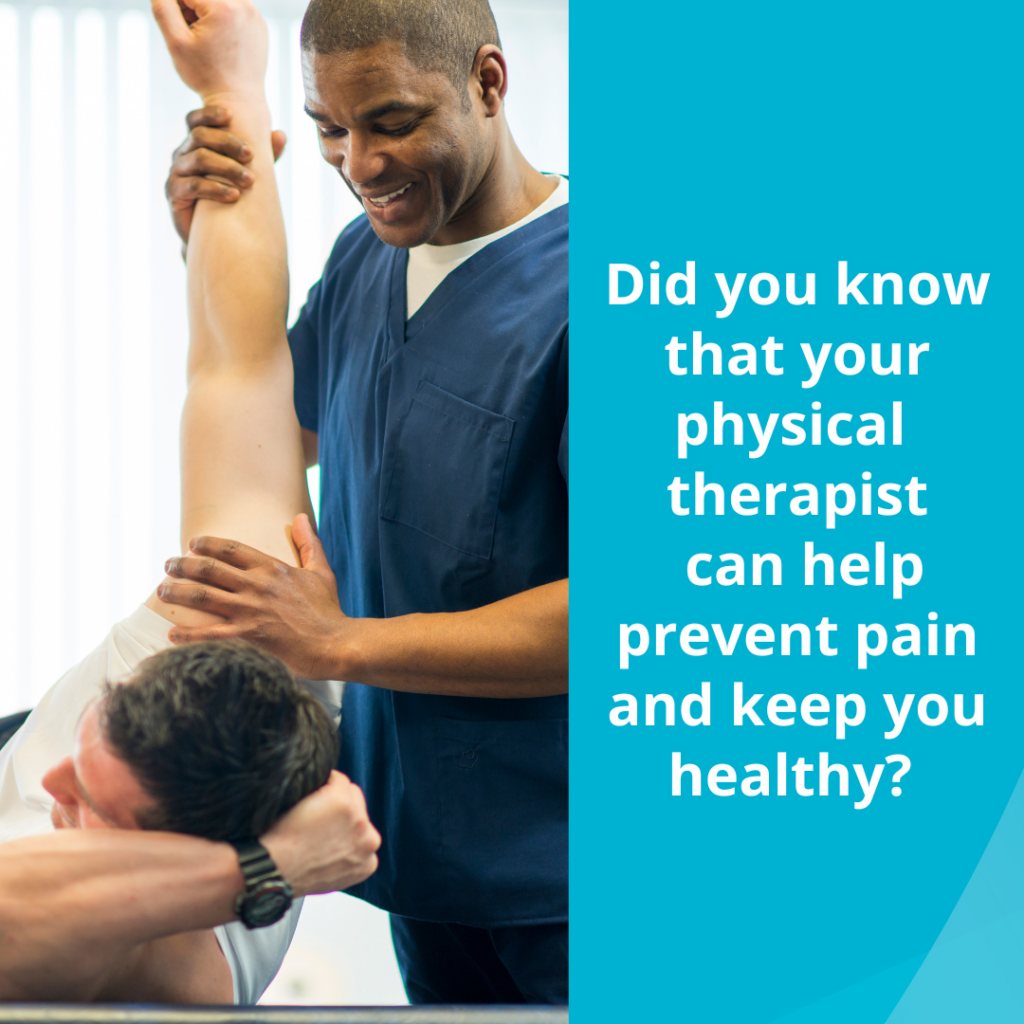
An annual PT exam is quick and easy. Your annual visit may include:

  • A history of your injuries, as well as a health history
  • Assessment of your strength, balance, flexibility, etc.
  • A review of your movement goals (do you want to run a marathon? Get on and off the floor easily playing with your grandkids?)
  • A review and update of your exercise program

How Important Is Moving Well?

There is strong evidence suggesting that movement is a valuable predictor of future health and resilience against disease. Moving well can keep you healthier and help you live longer.

Here are some examples of the power of movement when it comes to predicting future health:

Gait Velocity

Gait velocity is how fast you walk. Studies have shown that if your typical walking speed is over 1 m/s or 3.3 ft/s, you’re likely able to complete typical daily activities independently. You’re also less likely to be hospitalized and less likely to have adverse events like falls.

Get On and Off the Floor

A series of studies suggest that if you can go from standing to sitting on the floor and back to standing without using your hands, you’re a lot less likely to die than someone who can’t. It’s called the sitting-rising test. You can find the instructions and examples with a quick internet search.

Notice that both gait velocity and the sitting-rising test aren’t specific to any one thing. The risk of hospitalization in the gait velocity studies was hospitalization for any reason. Death in the sitting-rising studies was death from anything. So science says that moving well is incredibly important to your overall health. It’s also important for your quality of life.

We think moving well is just as important as your teeth, eyes, and taxes. If you agree, get that annual PT exam scheduled!

References

Physical Therapists’ Role in Prevention, Wellness, Fitness, Health Promotion, and Management of Disease and Disability – https://www.apta.org/apta-and-you/leadership-and-governance/policies/pt-role-advocacy


Ability to sit and rise from the floor is closely correlated with all-cause mortality risk — ScienceDaily

Gait velocity as a single predictor of adverse events in healthy seniors aged 75 years and older – PubMed (nih.gov)

breakingpic
Make it Stick – New Year’s Resolutions

Written by: Brad Kruse, PT, DPT, EDD, SCS, ATC, CSCS

Many things about this past year were far from normal. As we turn the page on 2020, one thing that remains is the tradition of making New Year’s resolutions.

The 3 most common New Year’s resolutions are to: exercise more, eat better and to lose weight.

There is a reason that Planet Fitness is the sponsor of the ABC Times Square New Year’s celebration. As you turn on your television, or log into your favorite digital platform, you will see numerous advertisements related to exercise and health. Although intentions are good, 80% of people will fail to achieve at least some of their New Year’s resolutions.

Make it Stick - New Year's Resolutions

Be among the 20%

A myriad of obstacles to success in achieving your New Year’s resolution exist. When it comes to exercise and living a healthy lifestyle, most of those obstacles are things largely under our control. Exercise, along with other health related activities or choices, is 20% knowledge and 80% behavior. Accept that behavior change is HARD and takes TIME, but be confident that you can meet your goals.

Ask yourself “Why am I doing this?”

The “why” must be present in your goal(s). To boost success, set goals that are:

       Meaningful: You must have a fairly strong, personal reason to make a change

       Measurable: Be specific. It’s easier to measure success when you “walk 3x/week” compared to “walk more”.

        Achievable: Be lofty, but identify smaller goals along the way that will be indicators of progress.

For example: “I will walk 3 miles, 3 times per week to help control my blood pressure” is a goal that may take time to achieve. Depending upon your current level of activity, it may be necessary to start with walking 3 blocks and advance from there.

A failure to plan is a plan to fail

Once you have established the “why” regarding the change you want to make, the next step is to make a plan. It is far too easy to say “I’ll exercise later today”. Later today easily becomes tomorrow or next week. Planned activities should change over time as you meet the smaller goals you previously have set for yourself. Research shows that you are more likely to adhere to an exercise plan if you specifically plan:

WHAT you are going to do?

What type of exercise might you enjoy?

As the saying goes, you must walk before you run.

Perform body weight exercise before you go to the weight room.

WHERE you are going to do it?

You don’t always have to go to a gym to exercise. Exercise equipment may be nice, but it is often not necessary.

It will not always be nice enough to go outside. Gyms are not always open.

WHEN the activity will be performed?

Consider your schedule and commitments, then find a place in your schedule where you can include exercise.

Make it Stick - New Year's Resolutions

The best exercise…

When it comes to exercise (or weight loss etc.), there are a lot of opinions out there. From television to social media, there is no shortage of people who say they have the answer and are willing to sell you their product or gimmick.


Truth is, the best exercise is the one you will do and enjoy.

  • Pick a mode of exercise that fits you, your exercise history, and your current state of health.
  • If you hate the idea of running, then the likelihood that you will stick with a plan that includes running is pretty low.
  • If you don’t know where to start, seek advice from someone such as the exercise professionals at Merge Performance Institute or Dubuque Physical Therapy.

Motivation

Motivation is difficult to sustain over time. Motivation trends up and down in relation to various situations in our lives. Sometimes we fail to see progress, or we have a setback that makes us want to quit. Understand that this is normal. Here are a few things that can help boost motivation and help you sustain activities that can lead to the positive changes you seek.

  • Write it down: Simply write your goal(s) on a piece of paper and sticking it somewhere you will see it daily.
  • Identify a partner or support system: Pursuing a goal with someone else can keep you both accountable. Resist the tendency to compare yourself to others. Just do your best.
  • Anticipate barriers: Things will come up that hinder progress. If you think about what will likely come up, you can plan around them. When you get off track, forgive yourself and start again.
  • Record your activity: Keeping a log of your exercise or food intake etc. helps you see progress, and it will also show you when you are off your chosen path.
  • Reward yourself along the way: When you meet one of your smaller goals, have a reward in mind.
  • There’s an App for that: Many Apps have been developed that can record your activity, and most provide some sort of reminder and motivational feedback.

“Start where you are, use what you have, do what you can”. – Arthur Ashe

This quote from the late Arthur Ashe sums up a great strategy for joining the 20% of people who are successful in keeping their New Year’s resolutions. Regardless of the nature of your goals, success starts with believing in yourself. Changing behavior so that you can work toward your goals hinges on choices you make each day.

Regardless of your success or failure in the past, today is a new day, a new opportunity. Make the most of it.