Dubuque Physical Therapy | Sports & Orthopedic PT

Sticking-To-Your-Exercise-Program-HEADER1-Dubuque-Physical-Therapy-Dubuque-IA.jpg
Sticking To Your Exercise Program

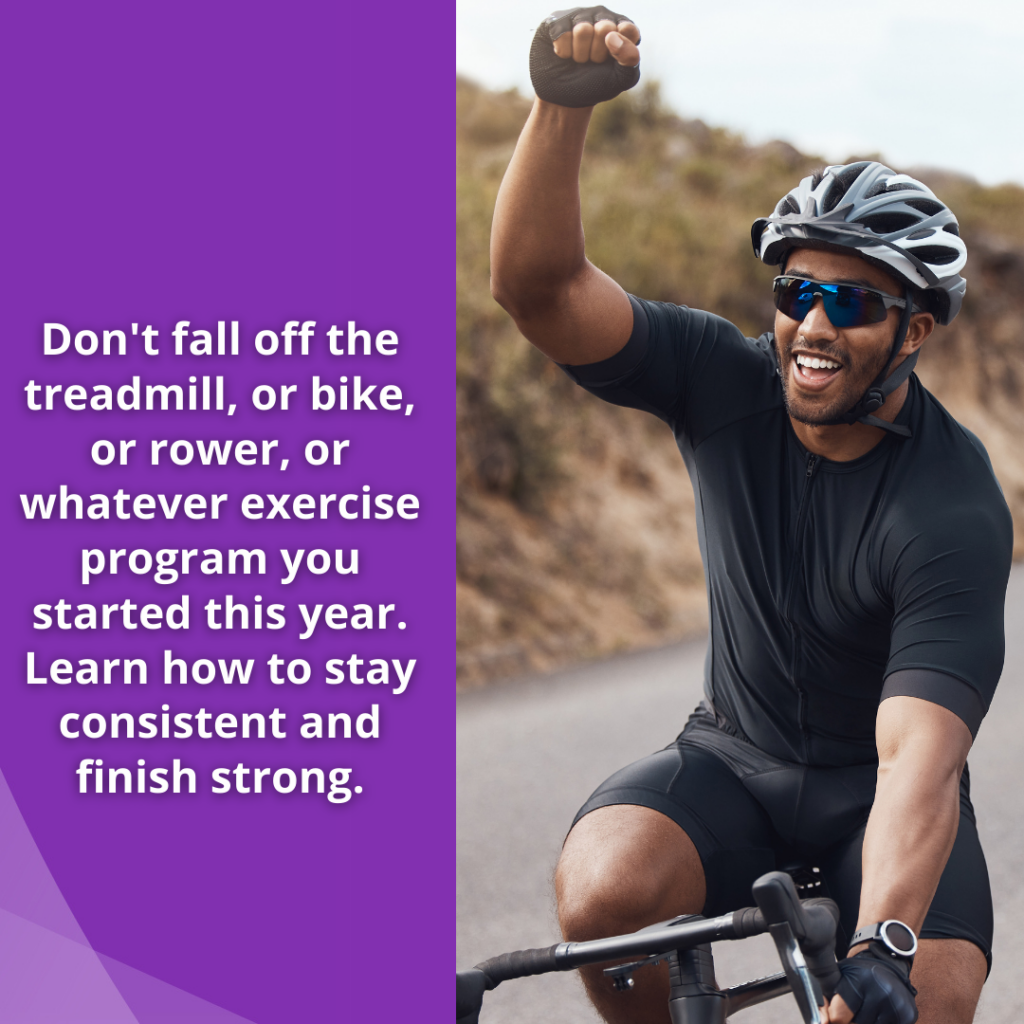
Don’t fall off the treadmill (or bike, or rower, or…)
Sticking To Your Exercise Program
Used with permission from the American Physical Therapy Association Private Practice Section

New year’s resolutions around fitness and exercise are incredibly popular. The excitement and hope generated by the start of the year makes starting an exercise program easy.

Now that it’s February, staying with it gets hard. Life gets busy, motivation drops, and suddenly you’re back on the couch, wondering how you’re 6 episodes into The Golden Bachelor instead of at the gym.

You know the benefits of exercise – they’re probably what motivated you to start exercising in the first place.

Knowing that you should exercise or why you should exercise isn’t the problem. Actually getting up and doing it is.

Top tips for making sure you stick to your exercise plan:

Set realistic goals. Don’t try to go from zero to hero overnight. Start with small, achievable goals and increase them gradually. Make it easy to win – that helps you build motivation and an exercise habit. For some people that might mean starting with a daily 10 minute walk. For some people, that bar is too high.

When we say make it easy to win, we mean easy. Your goal could be to scan your card at the gym 3 times a week. It might be putting on your walking shoes and going out the door. It might be one pushup. Start tiny.

Do activities you enjoy. Exercise ins’t punishment. Choose activities that are fun. It could be running, walking the dog, dancing, swimming, kickboxing, or playing a sport.

Schedule it. Schedule your workouts like you would any other important appointment. When people ask you to do something else during that time, say “sorry, I’ve got an appointment.” The more you make exercise a routine, the less likely you are to skip it.

Don’t go it alone. Having someone waiting for you at the gym really motivates you to get there. Having support helps push you to work harder, and motivates you when you’re feeling down. Your support could be a friend, the other people in a group fitness class, or a trainer.

Mix it up. Try a new class. If you usually run at the same pace, try intervals. Walk a different route. Doing the same thing over and over again gets boring and leads to burnout. Keep things interesting to stay interested.

Track your progress. Bonus points if you find a way to make it visual somehow. Our brains love to see tasks checked off, a chart or numbers going up, and rings closing. Seeing how far you’ve come is a great motivator. Keep track of your workouts in a journal, make a spreadsheet, use an app or fitness tracker.

Bribes work. Celebrate your successes, no matter how small. Set a goal to work out 3 times this week and treat yourself to your favorite coffee when you do. Buy yourself a new workout outfit, get a massage, or anything else that will help you stay motivated when you reach milestones.

Adjust. Don’t push yourself too hard, especially when you’re starting out. If you’re feeling tired and sore, take the intensity down. Plan rest days into your routine. Don’t make your goal and plan so rigid that it’s impossible to complete in the real world.

Forgive yourself! Everyone has setbacks. You’re going to get sick. You’re going to miss a workout. That’s ok. Pick yourself up and get back on track. With the right mindset and a little perseverance, you can reach your fitness goals.

Top tips for making sure you stick to your exercise plan:
Used with permission from the American Physical Therapy Association Private Practice Section
Top tips for making sure you stick to your exercise plan:
Used with permission from the American Physical Therapy Association Private Practice Section

References:

  1. Updating ACSM’s Recommendations for Exercise Preparticipation Health Screening. Medicine & Science in Sports & Exercise 47(11):p 2473-2479, November 2015. https://journals.lww.com/acsm-msse/fulltext/2015/11000/updating_acsm_s_recommendations_for_exercise.28.aspx
  2. Benefits of exercise for older adults: a review of existing evidence and current recommendations for the general population. Clinics in geriatric medicine 8.1 (1992): 35-50. https://www.sciencedirect.com/science/article/abs/pii/S0749069018304968
  3. Exercise Acts as a Drug https://bpspubs.onlinelibrary.wiley.com/doi/full/10.1111/j.1476-5381.2012.01970.x
  4. Perceived Exercise Barriers https://doi.org/10.1002/art.22098
  5. The Benefits of Exercise on Brain Health https://www.choosept.com/podcast/benefits-of-exercise-on-brain-health
  6. Exercise Assessment and Prescription in the older adults and individuals at risk for functional decline https://learningcenter.apta.org/products/exercise-assessment-and-prescription-in-older-adults-and-individuals-at-risk-for-functional-decline?_gl=11c4v900_gaMTEwNjIzMzg2MS4xNjgxODQyODcw_ga_ZZJK74HXNR*MTY5NzE5NzczNy4xMS4xLjE2OTcyMDAzODMuNTguMC4w&_ga=2.223614619.1495021570.1697197738-1106233861.1681842870
  7. 23 and ½ hours: What is the single best thing we can do for our healtt. https://www.youtube.com/watch?v=aUaInS6HIGo
  8. Time Magazine: How To Keep New Year’s Resolutions: https://time.com/6243642/how-to-keep-new-years-resolutions-2/
Moving Through Fibromyalgia
Moving Through Fibromyalgia With Physical Therapy

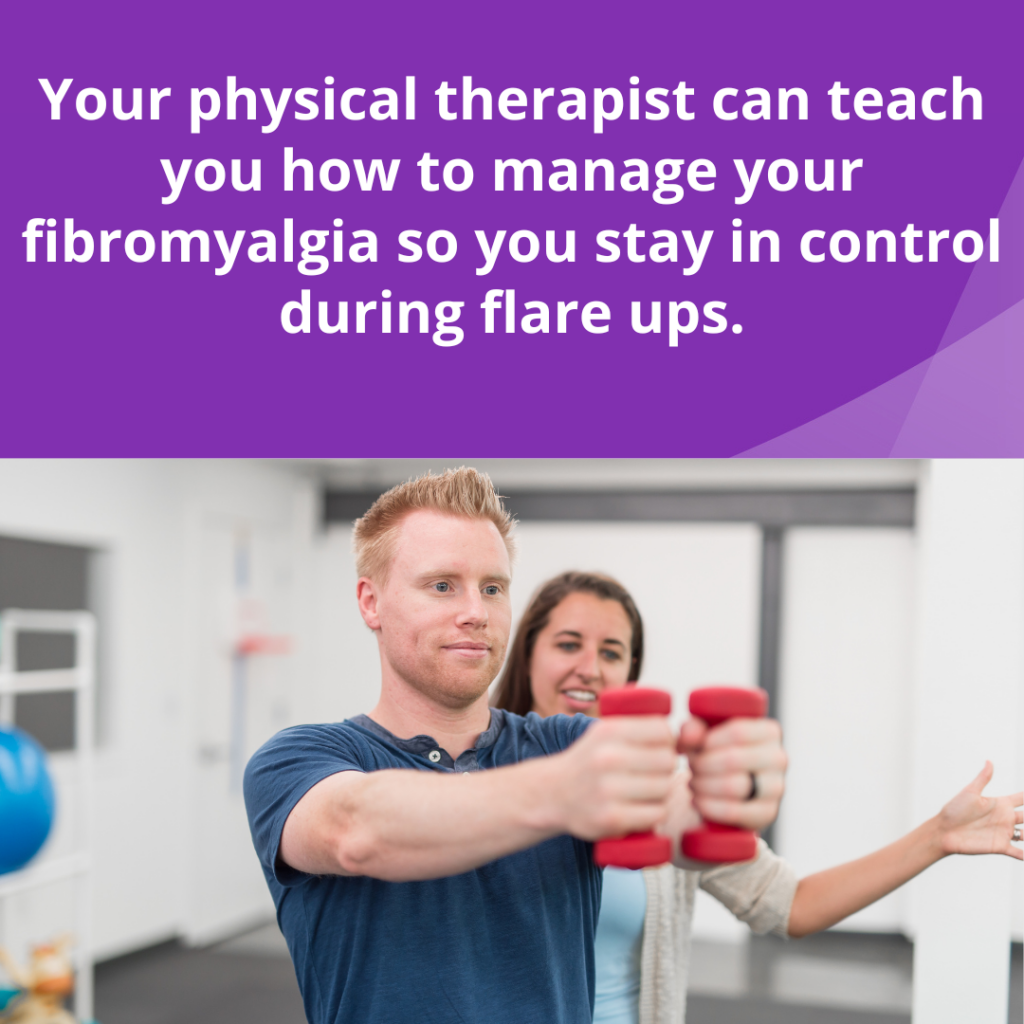
Nearly 5 million people in the United States have fibromyalgia. This chronic condition causes widespread pain, fatigue, and cognitive issues. It can be difficult to manage and can severely impact quality of life. The best treatment plans combine exercise, modalities and education. Physical therapists are experts in all three, so they’re the perfect practitioner to help!

Exercise 

Currently, recommendations for the management of fibromyalgia include patient education and non-pharmacological interventions. The right exercise routine can help with pain, fatigue, sleep disturbances, depression, and more. A combination of strengthening, stretching and aerobic exercise is the most effective. You and your PT will work together to find the right type and intensity of exercise to best manage your symptoms.

Modalities

Moving Through Fibromyalgia With Physical Therapy

Exercise isn’t the only tool the PT has to help people with fibromyalgia though. Gentle manual therapy and massage have been shown to help reduce pain and muscle stiffness caused by fibromyalgia. Physical therapists also use modalities to reduce symptoms.

Examples include:
● electrical stimulation
● laser
● biofeedback
● dry needling in states where it is allowed

In addition to land-based exercise, some clinics also have the option of aquatic therapy. This combines the benefits of exercise with the warmth of a therapeutic pool.

Education

Education is another important component in treating fibromyalgia. A physical therapist spends more time with their patients than most other practitioners. They have the time to help you understand what’s going on, and what you can do about it. Research shows that people with more knowledge about their condition have better outcomes, more confidence, and cope better.

While there is no cure for fibromyalgia, physical therapists can help with pain management, strength, mobility, fatigue and function to help patients find relief from their symptoms.

Moving Through Fibromyalgia With Physical Therapy

References:

Research (peer-reviewed)
● Therex effectiveness – https://www.ncbi.nlm.nih.gov/pmc/articles/PMC5632473/
● PT for fibromyalgia – https://pubmed.ncbi.nlm.nih.gov/31140398/
● Exercises for fibro – https://pubmed.ncbi.nlm.nih.gov/29185675/
● Manual therapy for fibro – ​​https://pubmed.ncbi.nlm.nih.gov/32604939/
● Aquatic PT for fibro – https://pubmed.ncbi.nlm.nih.gov/23818412/
● Effectiveness of exercise with fatigue, etc for fibro – https://pubmed.ncbi.nlm.nih.gov/32721388/

Articles and Content
https://pubmed.ncbi.nlm.nih.gov/11028838/
https://pubmed.ncbi.nlm.nih.gov/36051912/
https://www.choosept.com/guide/physical-therapy-guide-fibromyalgia

Cold Weather Makes Warm Ups Even More Important!

(used with permission by the APTA Private Practice Section)

Warm ups are always important. They gradually raise your heart rate, and get you breathing a little faster. This sends more oxygen, energy, and nutrients to your heart, lungs, and muscles so they can perform at their best. Warm ups also get the aerobic energy system started, which takes several minutes. Getting it going before your activity also helps you perform better.

What’s different in the cold?

Our bodies have a few tricks to stay warm in the cold. One of these is to narrow the blood vessels closest to the skin. That means that the more superficial muscles get less blood flow, making them more likely to be injured if you place too much demand on them before they’re ready. The restriction in the blood vessels also makes your heart work harder. This doesn’t mean you can’t be active in the cold, it just means that you should take a little more time to get your body ready.

How to warm up

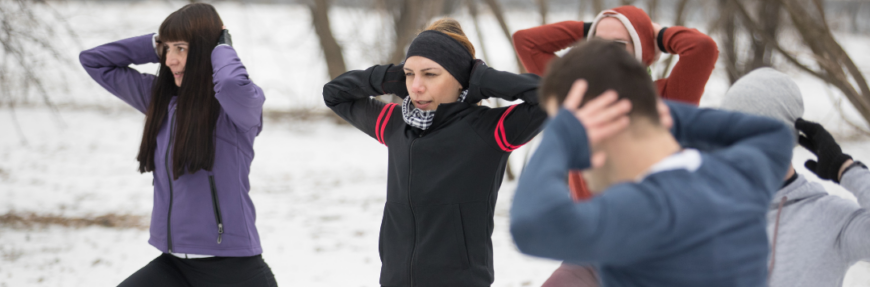
  • Start with something to raise your heart rate, maybe a brisk walk or light jog.
  • Follow that with a dynamic warm up like walking or jogging while pulling your knees up high to your chest.
  • Some high front kicks with straight knees will loosen your hamstrings.
  • Walking lunges with an upper body twist will get your whole body moving.

Your warm up should match the activity you have planned. If you’re not sure how it should look, ask your physical therapist!

Consider your clothes

Dress in layers so you can adjust your clothing to your activity level. After you warm up, you might want to take off a layer to avoid getting too hot during your main activity. You can always add layers back when your activity level drops or the temperature changes.

Even though it’s cold, cool down

We know it’s tempting to rush inside to a warm blanket and hot drink, but don’t skip the cool down. Keep moving with a walk or another form of active recovery so your heart rate can come down gradually. A cool down also helps your muscles to transition back to a relaxed state and can reduce soreness following your workout. Since your muscles are still warm, your cool down is the right place for static stretching.

The shorter days and lower temperatures don’t mean that you’re stuck inside for all of your exercise. Follow these tips and you can safely keep moving outside. If you’d like a customized warm up or cool down, or have questions about your exercise routine, your physical therapist is a great person to ask!