
Dubuque Physical Therapy | Sports & Orthopedic PT

Sticking-To-Your-Exercise-Program-HEADER1-Dubuque-Physical-Therapy-Dubuque-IA.jpg
Sticking To Your Exercise Program

Don’t fall off the treadmill (or bike, or rower, or…)
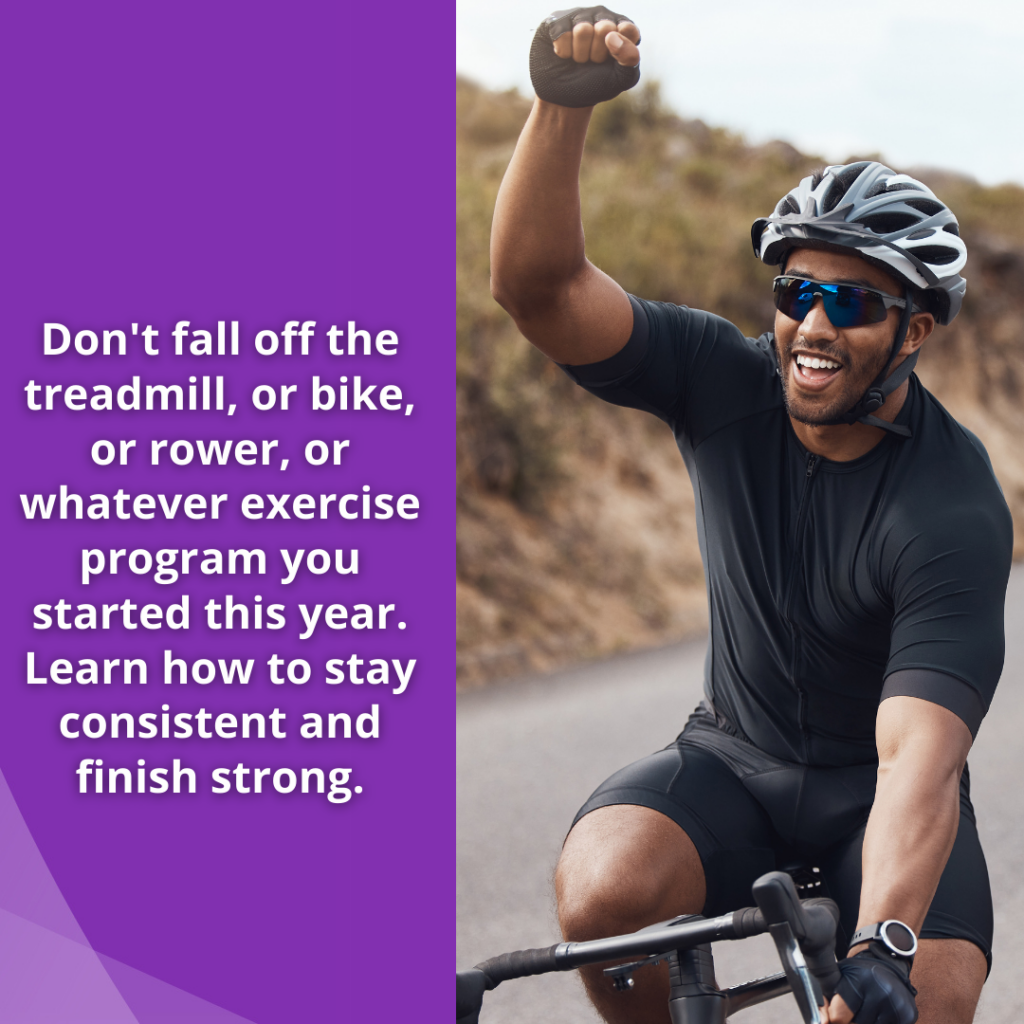
Sticking To Your Exercise Program
Used with permission from the American Physical Therapy Association Private Practice Section

New year’s resolutions around fitness and exercise are incredibly popular. The excitement and hope generated by the start of the year makes starting an exercise program easy.

Now that it’s February, staying with it gets hard. Life gets busy, motivation drops, and suddenly you’re back on the couch, wondering how you’re 6 episodes into The Golden Bachelor instead of at the gym.

You know the benefits of exercise – they’re probably what motivated you to start exercising in the first place.

Knowing that you should exercise or why you should exercise isn’t the problem. Actually getting up and doing it is.

Top tips for making sure you stick to your exercise plan:

Set realistic goals. Don’t try to go from zero to hero overnight. Start with small, achievable goals and increase them gradually. Make it easy to win – that helps you build motivation and an exercise habit. For some people that might mean starting with a daily 10 minute walk. For some people, that bar is too high.

When we say make it easy to win, we mean easy. Your goal could be to scan your card at the gym 3 times a week. It might be putting on your walking shoes and going out the door. It might be one pushup. Start tiny.

Do activities you enjoy. Exercise ins’t punishment. Choose activities that are fun. It could be running, walking the dog, dancing, swimming, kickboxing, or playing a sport.

Schedule it. Schedule your workouts like you would any other important appointment. When people ask you to do something else during that time, say “sorry, I’ve got an appointment.” The more you make exercise a routine, the less likely you are to skip it.

Don’t go it alone. Having someone waiting for you at the gym really motivates you to get there. Having support helps push you to work harder, and motivates you when you’re feeling down. Your support could be a friend, the other people in a group fitness class, or a trainer.

Mix it up. Try a new class. If you usually run at the same pace, try intervals. Walk a different route. Doing the same thing over and over again gets boring and leads to burnout. Keep things interesting to stay interested.

Track your progress. Bonus points if you find a way to make it visual somehow. Our brains love to see tasks checked off, a chart or numbers going up, and rings closing. Seeing how far you’ve come is a great motivator. Keep track of your workouts in a journal, make a spreadsheet, use an app or fitness tracker.

Bribes work. Celebrate your successes, no matter how small. Set a goal to work out 3 times this week and treat yourself to your favorite coffee when you do. Buy yourself a new workout outfit, get a massage, or anything else that will help you stay motivated when you reach milestones.

Adjust. Don’t push yourself too hard, especially when you’re starting out. If you’re feeling tired and sore, take the intensity down. Plan rest days into your routine. Don’t make your goal and plan so rigid that it’s impossible to complete in the real world.

Forgive yourself! Everyone has setbacks. You’re going to get sick. You’re going to miss a workout. That’s ok. Pick yourself up and get back on track. With the right mindset and a little perseverance, you can reach your fitness goals.

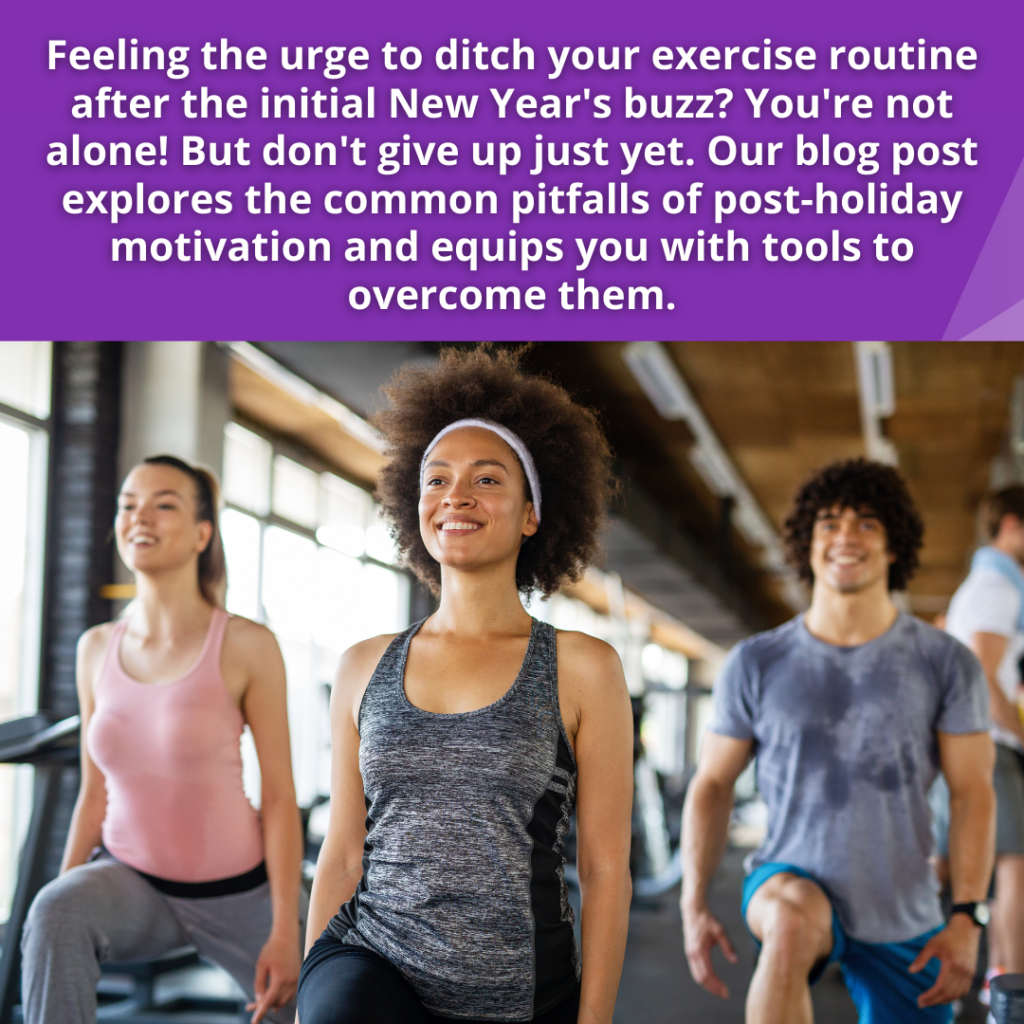
Top tips for making sure you stick to your exercise plan:
Used with permission from the American Physical Therapy Association Private Practice Section
Top tips for making sure you stick to your exercise plan:
Used with permission from the American Physical Therapy Association Private Practice Section

References:

  1. Updating ACSM’s Recommendations for Exercise Preparticipation Health Screening. Medicine & Science in Sports & Exercise 47(11):p 2473-2479, November 2015. https://journals.lww.com/acsm-msse/fulltext/2015/11000/updating_acsm_s_recommendations_for_exercise.28.aspx
  2. Benefits of exercise for older adults: a review of existing evidence and current recommendations for the general population. Clinics in geriatric medicine 8.1 (1992): 35-50. https://www.sciencedirect.com/science/article/abs/pii/S0749069018304968
  3. Exercise Acts as a Drug https://bpspubs.onlinelibrary.wiley.com/doi/full/10.1111/j.1476-5381.2012.01970.x
  4. Perceived Exercise Barriers https://doi.org/10.1002/art.22098
  5. The Benefits of Exercise on Brain Health https://www.choosept.com/podcast/benefits-of-exercise-on-brain-health
  6. Exercise Assessment and Prescription in the older adults and individuals at risk for functional decline https://learningcenter.apta.org/products/exercise-assessment-and-prescription-in-older-adults-and-individuals-at-risk-for-functional-decline?_gl=11c4v900_gaMTEwNjIzMzg2MS4xNjgxODQyODcw_ga_ZZJK74HXNR*MTY5NzE5NzczNy4xMS4xLjE2OTcyMDAzODMuNTguMC4w&_ga=2.223614619.1495021570.1697197738-1106233861.1681842870
  7. 23 and ½ hours: What is the single best thing we can do for our healtt. https://www.youtube.com/watch?v=aUaInS6HIGo
  8. Time Magazine: How To Keep New Year’s Resolutions: https://time.com/6243642/how-to-keep-new-years-resolutions-2/
Your-Strength-and-Overall-Health-Can-Improve
Your Strength and Overall Health Can Improve With Physical Rehabilitation

Everyone aspires to live a healthy, active, and powerful lifestyle. However, this type of lifestyle is not always simple to maintain, particularly for people who suffer from chronic pain. Physical therapy, fortunately, is an excellent resource for relieving pain and achieving physical rehabilitation.

If you want to start living a healthy lifestyle but aren’t sure where to begin, give Dubuque Physical Therapy a call today! We’ll tailor a treatment plan to your specific needs so you can achieve your objectives using the most effective approaches.

How can I know if I need physical therapy?

Maintaining a healthy lifestyle takes effort, but it becomes lot simpler once you get into the swing of things. One of the simplest methods to boost your health is to eat nutritious foods (although we know those sweets can be brutal to kick!) Physical activity is the most difficult part to develop a habit of, especially if you are hampered by chronic pain.

Some people take anti-inflammatory or pain-relieving medicines to disguise their symptoms, while others give up on the idea of being active completely. Fortunately, with the help of a physical therapist, you may restore your pain-free, healthy lifestyle and resume your favorite hobbies.

Benefits of physical therapy

A physical therapist is a movement specialist, educated in analyzing mobility issues with walking, running, jumping, bending, stretching, and almost every other form of physical activity. Your physical therapist can pinpoint problem areas and create a customized treatment plan aimed at improving those areas.

Whatever your reason for obtaining physical therapy services, the goal remains the same. Perhaps you’re still dealing with the effects of an injury. Maybe you’re recovering from surgery and need to regain your range of motion. Maybe your joints aren’t what they used to be, and you’re seeking a way to feel better. Whatever the case may be, physical therapists are committed to reducing your discomfort and restoring your physical health to its previous state.

Through in-office sessions and at-home exercises, patients strengthen their muscles and joints, improve their balance, build endurance, and experience pain relief, all without the unwanted harmful risks of drugs or surgery.

What is a physical therapy treatment plan like?

Every patient is unique, and we recognize that at our clinic. That’s why we tailor each treatment plan to the individual needs of each patient.

When you come in for your first visit, you’ll have some diagnostic tests done to help your physical therapist figure out where to start with treatments.

Your pain levels, balance, range of motion, and overall function will all be assessed throughout these examinations. In addition, your physical therapist will inquire about your medical history. Following the collection of all of this information, your physical therapist will develop a specific treatment plan to assist you in achieving your health goals.

Pain alleviation, strengthening, and functional integration are the three main components of physical therapy. Some people fear physical therapy because they assume it may harm them; however, this is not the case.

Physical therapy aims to relieve pain and build muscles, and your physical therapist will ensure that your treatment plan does not cause you any discomfort. This is accomplished using a variety of therapeutic options, including ice and heat therapy, stretching, bracing, and ultrasound.

Movement is also necessary for an active lifestyle. Your treatment plan will be based on movements that will improve your strength, flexibility, balance, and overall mobility. Many of these exercises will be assisted by your therapist, but he or she will also supply some basic ones that you can do at home.

What are you waiting for? Give us a call today!

Physical therapy allows you to live the life you want, free of severe limits. This can only happen if you apply what you’ve learned in your therapy to the real world. Your physical therapist is just as committed as you are, and he or she will push you to achieve all of the goals you set out for yourself at the start.

If you are looking to improve your health, strength, and physical activity, look no further. We can help you get there – even if you’re dealing with pain. To get started on the path toward a healthier and happier lifestyle, call our office today to schedule your consultation!

Sources:
5-Tips-to-Decrease-Pain
5 Tips to Decrease Pain and Improve Your Energy Levels

Living with chronic pain can change the way you do things on a daily basis. Whether your pain symptoms reside in your back, hips, neck, knees, or other area of your body, one thing rings true: dealing with discomfort is always the last thing anybody wants to do!

Fortunately, there are some simple lifestyle changes you can make in order to decrease your pain while simultaneously increasing your energy. When you do these in addition to your physical therapy treatments, you can help recover from your pain and reach the physical goals you’ve been aiming towards.

Call Dubuque Physical Therapy today to learn more about how our physical therapists can help you to decrease your pain symptoms (or even eliminate them!) and boost your energy levels. We’d be happy to see you and help in any way we can!

In the meantime, check out these 5 super helpful PT tips about how regular exercise can result in better overall health:

Tips to improve your overall health and pain free life

1. Get a good night’s sleep on the best mattress for your needs.

We spend a lot of time sleeping. Did you know that approximately ⅓ of your life is spent asleep? Because of this, it is important to make sure that your mattress is right for you.

The mattress you sleep on can affect the way your body feels when it’s awake. Since everyone sleeps differently, it is recommended that you choose a mattress according to your sleep style:

  • Soft mattress. Side sleepers generally benefit from a softer mattress, as it is easier on their sides.
  • Firm mattress. If you sleep on your back, a medium-to-firm mattress will help with those backaches.
  • Memory foam. If you toss and turn all night or swap positions frequently, memory foam may be right for you. Because it conforms to the shape of your body, it may aid in your staying put.

2. Eat nutritious meals.

The food you eat is what fuels you throughout the day. Certain foods can provide you with more energy, in addition to relieving the chronic pain you feel. A few of these include:

  • Salmon. Salmon provides omega-3 fatty acids, which help to relieve neck, back, and joint pain.
  • Cherries. Cherries increase antioxidants, which can relieve pain and inflammation.
  • Ginger. The ginger plant has been known to relieve pain from migraines, as well as muscle aches and nausea. It is typically used as a spice and can be easily sprinkled into a meal.
  • Hot peppers. This spicy treat has been known to relieve arthritis pain. Even if you aren’t a fan of the spice, a serving as small as half a teaspoon could help bring some relief.

3. Practice stress-relieving techniques.

While we are all aware of the psychological effects of stress, it can also increase physical pain. As a result, it’s critical to carry some stress-relieving tactics in your back pocket for when you need them.

A warm bath is an excellent technique to relieve tension while also soothing sore muscles and joints. Breathing exercises can also aid relaxation by soothing the mind and body. Taking two or three deep breaths and slowly releasing them through your nose is an easy technique to do this.

4. Boost your endorphins.

When you exercise, your body produces endorphins, which are feel-good chemicals that work as natural pain relievers. When you have aches and pains, it may seem tough to exercise, but even light movement can bring much-needed relief.

You can also increase your endorphin levels by inhaling a relaxing lavender aroma, listening to music, or eating chocolate. So you see, it’s a win-win situation all around!

5. Come in for your physical therapy treatments for pain relief!

At our physical therapy practice, we have several treatment methods that can help alleviate your pain and increase your energy. We will find where your pain is originating so we can address it at the root, providing you with long lasting relief. Some common methods we employ for pain relief includes:

  • Massage therapy. A physical therapist is well-versed in the treatment of aching body parts. He or she can manipulate your aching muscles and joints using massage, which reduces inflammation and provides relief.
  • Aquatic therapy. Water can stimulate nerves and provide resistance for exercise and strength training. It allows for easier movement, which can ease the stress on your body.
  • Ultrasound. Ultrasound produces sound waves that can assist in blocking pain signals to the brain.
  • Ice and heat therapies. Warming the muscles and tendons helps to make movement easier and less painful. Ice decreases inflammation while simultaneously giving pain relief.

Call our clinic for an appointment today for relief from pain

You should notice an increase in energy and a decrease in pain if you incorporate some of these strategies into your regular routine. Call Dubuque Physical Therapy today; we’ll assist you in achieving your physical objectives so that you can live the life you desire!