Dubuque Physical Therapy | Sports & Orthopedic PT

Are-You-Searching-For-Ways-To-Improve-Your-Life
Are You Searching For Ways To Improve Your Life? Here Are 6 Benefits Physical Therapy Can Offer!

Do you need to heal from a recent accident or surgery, but you’re having a hard time doing it alone? Have you noticed that your muscles are aching or sore throughout the day? Do you have a chronic illness that causes you to be in near-constant pain? 

Physical therapy can help you enhance your health in any situation. While there are several advantages to physical therapy, the following are the top six ways it can improve your quality of life!

Give Dubuque Physical Therapy a call today to schedule an appointment so we can help you feel your absolute best!

How can physical therapy help me feel better?

1. It can help you improve your balance!

Whether you’re standing, walking, or doing an exercise routine, a physical therapist can provide you with a variety of exercises to help you improve your balance!

Balance normally declines as bones become brittle with age, and there are various health issues that can influence your balance. Improving your balance will help you prevent trips and falls, which can result in catastrophic injuries.

Physical therapy can also help you participate in and enjoy more demanding activities that you may not have been able to do previously.

2. It can offer more opportunities for physical activity.

Physical therapy can benefit you even if you’re in good health and participate in a variety of activities on a daily basis.

Your physical therapist can assist you in improving your performance by advising you on specific forms and techniques. If you want to get back into the things you enjoy, your physical therapist can help you do so. You’ll collaborate on a treatment plan that will help you achieve your objectives, and he or she will help you improve your strength, endurance, and flexibility.

3. You’ll be at less of a risk of injury.

Physical therapy aids in the recovery of injuries, but most people are unaware that it can also aid in the prevention of injuries. Your physical therapist can give you a variety of exercises to undertake at home and before engaging in physical activity to help you avoid injury. If you’re recuperating from surgery, your physical therapist can teach you new techniques to walk and move that will help you stay active while lowering the risk of falls and injury.

4. Your flexibility will improve.

Increasing your muscle and joint flexibility is a goal of many physical therapy treatment programs. Your physical therapist can assist you with a number of stretching treatments as well as heat therapy to loosen up tight muscles and tendons. Massage or breathing techniques may be recommended by your physical therapist to help you relax and become more flexible.

5. Had surgery? Recovery will be smoother and quicker.

If you’ve previously had surgery or experienced an injury, a physical therapy program might be designed to help you get back on your feet. Your physical therapist will design a rehabilitation program that is tailored to your unique needs, with the goal of assisting you in recovering as rapidly as possible. Strength and range of motion exercises, as well as any specialty treatments recommended by your physical therapist, may be included.

6. You might be able to avoid surgery altogether!

You always run the danger of blood clots, infection, and a long recovery time when you have surgery. In many circumstances, physical therapy can resolve a problem without requiring surgery. A physical therapist can help you with sprains, strains, dislocations, tendonitis, bursitis, arthritis, and acute/chronic pain, to name a few ailments.

Physical therapy aids your body’s natural healing process, and while surgery may be necessary in some cases, it’s almost always preferable to avoid an intrusive operation if the condition can be managed with physical therapy.

Give our clinic a call today to schedule an appointment

In order to help you achieve your health and fitness objectives, your physical therapist will work directly with you during your appointments. You’ll be guided through your treatment program and your exercises may change over time according to your progress.

Physical therapy is available to help you find comfort, prevent an injury, or just enhance your physical function. Contact our office now if you’re ready to get started on the road to better health!

Sources:
Did-You-Know-Physical-Therapy-Can-Alleviate-Pain-and-Discomfort
Did You Know Physical Therapy Can Alleviate Pain and Discomfort?

When you wake up in the morning, do you feel achy? While aches and pains are common from time to time, waking up every morning with them can indicate a more serious problem.

If you wake up with painful sensations for no apparent reason, don’t hesitate to contact Dubuque Physical Therapy for help as soon as possible.

We’ll get to the source of your issue to help you find relief, so you may wake up feeling refreshed in the mornings!

Why is my pain worse in the morning?

Overuse of your joint tissues throughout the day might aggravate them without you even noticing it. When you fall asleep, you are pretty much immobile for several hours, which can cause tissue inflammation to thicken and irritate the affected area further. As a result, you feel stiff and achy when you wake up in the morning.

Most of the time, after you get up and walk around, this feeling will dissipate. This is due to the fact that movement causes the inflammation to become liquid-like, reducing pain.

Hydration is an easy way to avoid aching morning wake-up calls. Dehydration slows down your chemical processes, however, being hydrated permits your body’s tissues to work at their regular rate. This will protect your tissues from becoming excessively inflamed, which will help to relieve inflammation.

How can physical therapy help relieve aches and pains?

Your physical therapy treatment plan will be determined by your symptoms and/or diagnosis. In addition to your customized treatment plan, many physical therapists will recommend at-home remedies. On your path to wellness, your physical therapist will most likely give you the following advice:

  • Practice proper posture. Avoiding unwanted aches and pains can be as simple as maintaining proper posture. Try to get up every half hour for some light stretches if your job needs you to sit at a desk for extended periods of time or if you stay sedentary for lengthy periods of time every day. Move around and keep your circulation running to relieve joint pain. Make sure your spine is straight and your shoulders are back at your desk to avoid slouching or hunching.
  • Maintain a good sleep schedule. Getting a good night’s sleep creates an endless cycle of benefits, especially when it comes to physical therapy. Sufficient amounts of sleep will increase your ability to exercise effectively, which in turn will help you sleep better at night. Your sleep and exercise habits go hand-in-hand, and the results of one will always affect the other.
  • Eat healthy. You can lessen the recurrence of pain by watching what you eat! It’s important to eat lots of brightly colored fruits and vegetables. These nutritious meals are higher in antioxidants and vitamins, which help to reduce inflammation, which causes pain and irritation. A better diet also aids in improved sleep and allows your body to reap more benefits from exercise, furthering the never-ending cycle of benefits.

Common pain conditions physical therapy can help with

If your doctor has diagnosed you with a serious medical condition, or you’ve sustained a painful injury that impacts your joints and tissues, physical therapy would be the most beneficial next step.

Physical therapy is a common and effective treatment plan for chronic pain relief that most doctors will suggest. Here are some of the most common ailments that can be relieved with the guidance of a physical therapist:

  • Gout.
  • Lupus.
  • Tendinitis.
  • Chronic headaches.
  • Sprains.
  • Strains.
  • Bursitis.
  • Sports-related injury.
  • Osteoarthritis.
  • Rheumatoid arthritis.

All of these conditions can cause aches, pains, and stiffness. Physical therapy treatment plans for these conditions will focus on helping you achieve a greater range of motion in your affected joints or limbs, in addition to providing pain relief. These work to improve overall function and help you get back to your normal mobility.

If you are living with constant aches and pains, it is in your best interest to consult with a physical therapist. Your physical therapist will conduct a physical evaluation to determine the origin of your pain and create a treatment plan accordingly.

This treatment plan will work to relieve your pain and improve your function, with your physical therapist acting as a support system through every step along the way.

Treatment plans consist of targeted stretches and exercises to help you recover from your condition. Additional treatment methods may also be added to your treatment plan as your physical therapist deems fit.

Give our clinic a call for an appointment

You don’t have to keep saying no to doing things you love because of your fear of chronic pain. If you are living with aches and pains, contact our office today to find out how we can help! We’ll get you back to living life on your own terms without the use of medication!

Sources:
Sticking-To-Your-Exercise-Program-HEADER1-Dubuque-Physical-Therapy-Dubuque-IA.jpg
Sticking To Your Exercise Program

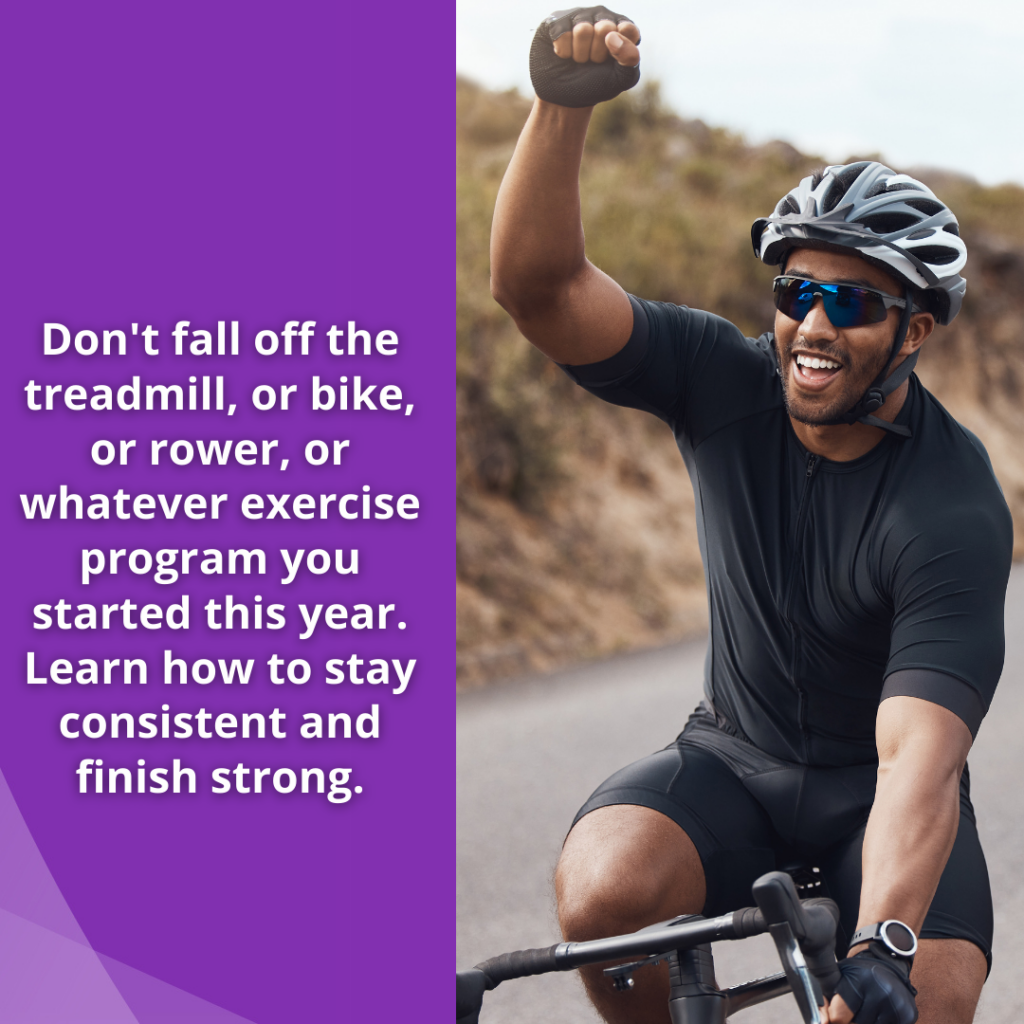
Don’t fall off the treadmill (or bike, or rower, or…)

Sticking To Your Exercise Program
Used with permission from the American Physical Therapy Association Private Practice Section

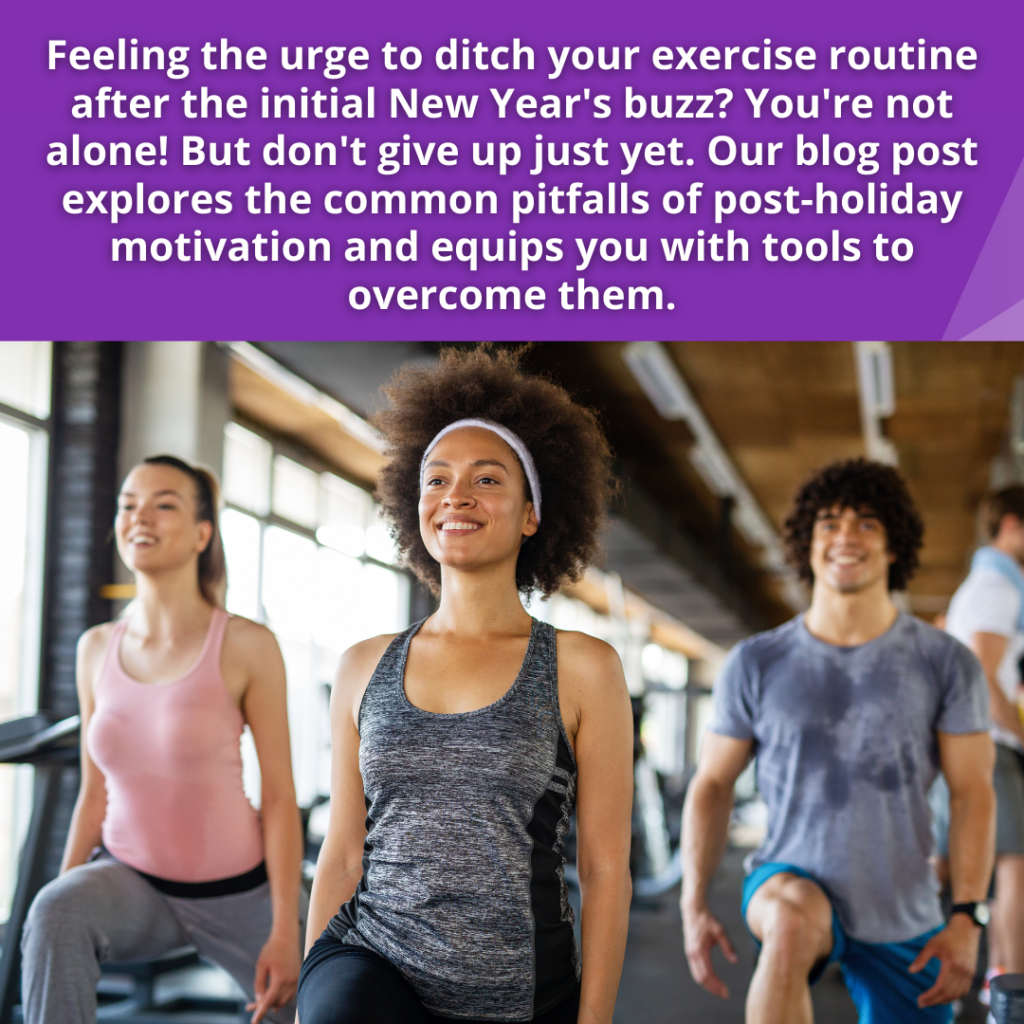
New year’s resolutions around fitness and exercise are incredibly popular. The excitement and hope generated by the start of the year makes starting an exercise program easy.

Now that it’s February, staying with it gets hard. Life gets busy, motivation drops, and suddenly you’re back on the couch, wondering how you’re 6 episodes into The Golden Bachelor instead of at the gym.

You know the benefits of exercise – they’re probably what motivated you to start exercising in the first place.

Knowing that you should exercise or why you should exercise isn’t the problem. Actually getting up and doing it is.

Top tips for making sure you stick to your exercise plan:

Set realistic goals. Don’t try to go from zero to hero overnight. Start with small, achievable goals and increase them gradually. Make it easy to win – that helps you build motivation and an exercise habit. For some people that might mean starting with a daily 10 minute walk. For some people, that bar is too high.

When we say make it easy to win, we mean easy. Your goal could be to scan your card at the gym 3 times a week. It might be putting on your walking shoes and going out the door. It might be one pushup. Start tiny.

Do activities you enjoy. Exercise ins’t punishment. Choose activities that are fun. It could be running, walking the dog, dancing, swimming, kickboxing, or playing a sport.

Schedule it. Schedule your workouts like you would any other important appointment. When people ask you to do something else during that time, say “sorry, I’ve got an appointment.” The more you make exercise a routine, the less likely you are to skip it.

Don’t go it alone. Having someone waiting for you at the gym really motivates you to get there. Having support helps push you to work harder, and motivates you when you’re feeling down. Your support could be a friend, the other people in a group fitness class, or a trainer.

Mix it up. Try a new class. If you usually run at the same pace, try intervals. Walk a different route. Doing the same thing over and over again gets boring and leads to burnout. Keep things interesting to stay interested.

Track your progress. Bonus points if you find a way to make it visual somehow. Our brains love to see tasks checked off, a chart or numbers going up, and rings closing. Seeing how far you’ve come is a great motivator. Keep track of your workouts in a journal, make a spreadsheet, use an app or fitness tracker.

Bribes work. Celebrate your successes, no matter how small. Set a goal to work out 3 times this week and treat yourself to your favorite coffee when you do. Buy yourself a new workout outfit, get a massage, or anything else that will help you stay motivated when you reach milestones.

Adjust. Don’t push yourself too hard, especially when you’re starting out. If you’re feeling tired and sore, take the intensity down. Plan rest days into your routine. Don’t make your goal and plan so rigid that it’s impossible to complete in the real world.

Forgive yourself! Everyone has setbacks. You’re going to get sick. You’re going to miss a workout. That’s ok. Pick yourself up and get back on track. With the right mindset and a little perseverance, you can reach your fitness goals.

Top tips for making sure you stick to your exercise plan:
Used with permission from the American Physical Therapy Association Private Practice Section
Top tips for making sure you stick to your exercise plan:
Used with permission from the American Physical Therapy Association Private Practice Section

References:

  1. Updating ACSM’s Recommendations for Exercise Preparticipation Health Screening. Medicine & Science in Sports & Exercise 47(11):p 2473-2479, November 2015. https://journals.lww.com/acsm-msse/fulltext/2015/11000/updating_acsm_s_recommendations_for_exercise.28.aspx
  2. Benefits of exercise for older adults: a review of existing evidence and current recommendations for the general population. Clinics in geriatric medicine 8.1 (1992): 35-50. https://www.sciencedirect.com/science/article/abs/pii/S0749069018304968
  3. Exercise Acts as a Drug https://bpspubs.onlinelibrary.wiley.com/doi/full/10.1111/j.1476-5381.2012.01970.x
  4. Perceived Exercise Barriers https://doi.org/10.1002/art.22098
  5. The Benefits of Exercise on Brain Health https://www.choosept.com/podcast/benefits-of-exercise-on-brain-health
  6. Exercise Assessment and Prescription in the older adults and individuals at risk for functional decline https://learningcenter.apta.org/products/exercise-assessment-and-prescription-in-older-adults-and-individuals-at-risk-for-functional-decline?_gl=11c4v900_gaMTEwNjIzMzg2MS4xNjgxODQyODcw_ga_ZZJK74HXNR*MTY5NzE5NzczNy4xMS4xLjE2OTcyMDAzODMuNTguMC4w&_ga=2.223614619.1495021570.1697197738-1106233861.1681842870
  7. 23 and ½ hours: What is the single best thing we can do for our healtt. https://www.youtube.com/watch?v=aUaInS6HIGo
  8. Time Magazine: How To Keep New Year’s Resolutions: https://time.com/6243642/how-to-keep-new-years-resolutions-2/