
Dubuque Physical Therapy | Sports & Orthopedic PT

October-2022-4
Don’t Keep Injury Secrets!

(used with permission from the APTA Private Practice Section)

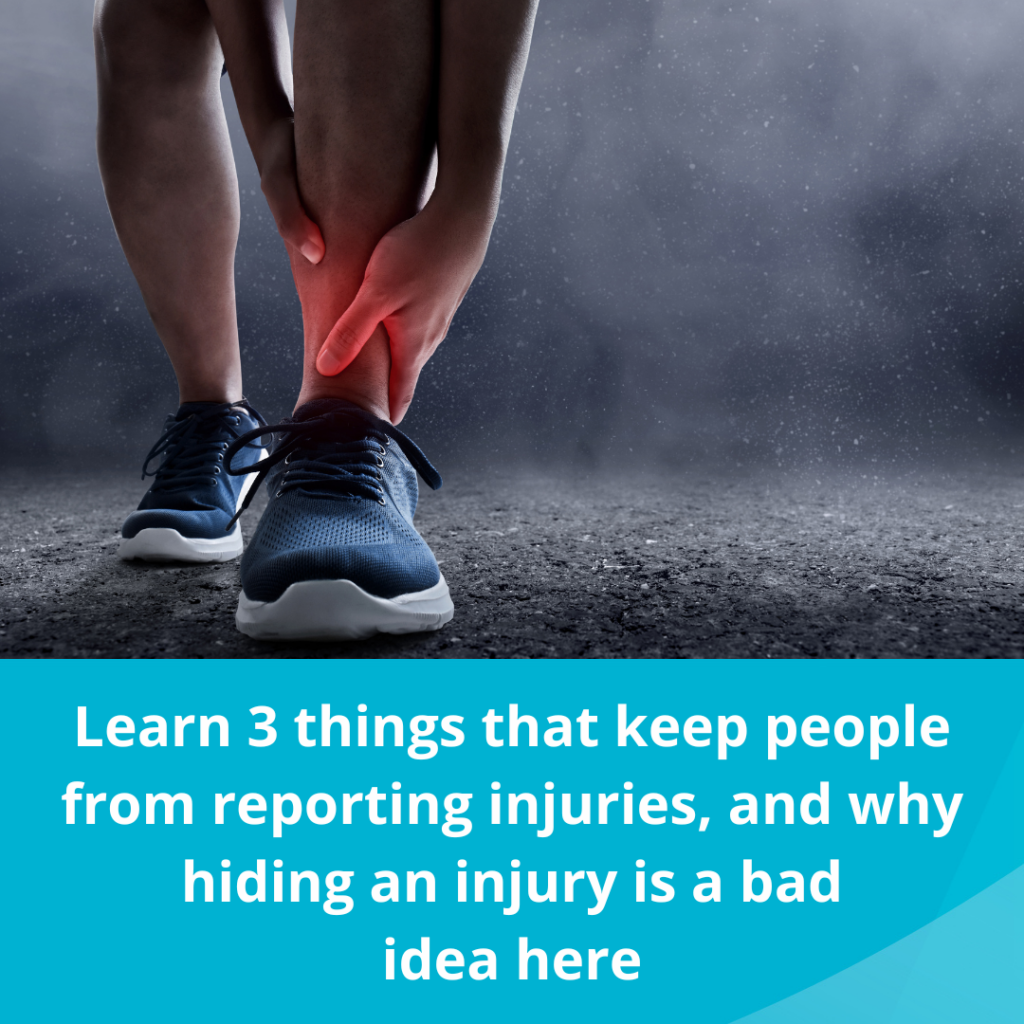
You might be wondering who would keep an injury secret. The answer is – lots of people! The first thing that comes to your mind might be an athlete, like a football player, or maybe a baseball pitcher. But athletes aren’t the only ones that keep injury secrets. Performers like dancers keep injury secrets, and so do workers in all types of jobs. Why would anyone want to keep their injury secret instead of getting it treated and letting it heal? Read on…

Stigma
Don't Keep Injury Secrets!

Although there have been big improvements in the culture around sports, performing arts, and worker’s comp, some people still have the old “no pain, no gain” attitude. To some people, reporting an injury is an

 act of weakness, or a way of letting the team down. There can also be external pressure from coaches, parents, teammates, supervisors, or fans to keep playing or working.

Fear of Loss

With the focus on head injuries in recent years, athletes that get hit in the head know if they report concussion symptoms, they’re coming out of the game. Workers who get hurt on the job fear loss of pay, or loss of their job. Performers who get hurt might fear that their replacement will outshine them on the stage and take their place.

Competitive Advantage

While the first two reasons can apply to athletes, performers, workers and most any other group that might be hiding an injury, this one is limited to athletes. If an opposing team knows a player is injured, and what the injury is, they might be able to take advantage of it. For example, if a football team has a running quarterback that has an ankle injury, it will change how the opposing defense plays.

Competitive Advantage

These reasons all make some sense, but they’re also all shortsighted. Finishing a game, dancing tomorrow night, or working one more shift are never worth your long term health. Hiding a minor injury can turn it into a major one. It’s never weak to report an injury and you’re not letting your teammates, or coworkers down. If you’re not up to your best, you owe it to the people counting on you to let them know. Letting a healthy player, performer, or worker take your place is the right thing to do. If you’re injured, don’t hide it! Let the right people know, then go to the right person for help – your physical therapist!

August-2022-2
What Physical Therapy Can Do For Arthritis

(Used with permission from the American Physical Therapy Association Private Practice Section)

WHAT EXACTLY IS ARTHRITIS?

What Physical Therapy Can Do For Arthritis

Arthritis is a chronic condition that causes inflammation of the joints. It can cause pain, stiffness, and swelling. The hips, knees, hands, and spine are the most commonly affected joints. Arthritis is not a single disease but an umbrella term that includes a variety of different types. Some of the more common examples are osteoarthritis, rheumatoid arthritis, gout, psoriatic arthritis and ankylosing spondylitis.

RE-THINK YOUR TREATMENT While physical therapy might not be the first treatment you think of for arthritis, it probably should be. A lot of people with arthritis choose to use medication to manage their pain, stop activities that hurt, and wait for things to get bad enough to have a joint replacement. But this isn’t a great plan – all medications have side effects, even over the counter ones. Reducing activity leads to muscle atrophy and even stiffer joints. Even though joint replacement surgery usually has good outcomes, it does come with its own set of risks and a painful recovery.

WHY EXERCISE? Physical therapy has been extensively researched as a treatment for arthritis, and demonstrates good outcomes. Physical therapists typically start with exercise as the base for arthritis treatment. Exercise helps to regain lost joint motion, decrease feelings of stiffness, and strengthen muscles surrounding the affected joint. These benefits are all somewhat obvious.

What surprises many people is that exercise has been shown to be as effective as medication for pain relief in many types of arthritis, without the side effects.

WHAT ELSE CAN PT DO? Physical therapy has more to offer people with arthritis than just exercise though. Education helps people understand their condition, what to expect, and how to manage it. As experts in human movement, physical therapists are especially good at helping people modify the way they perform certain tasks or activities to reduce strain on joints affected by arthritis. They can also suggest ways to modify the environment at work or home to reduce pain and improve function. They may also suggest things like braces, orthotics, or other devices that can help maintain mobility and reduce pain. On top of all of that, PT has been proven to be a cost effective treatment, too.

TRY PT FIRST With so many techniques that are proven effective in helping people with arthritis, physical therapy is a recommended first line treatment for many types of arthritis. Now that you have a better understanding of what PT can do, hopefully you’ll think of PT first when you think of arthritis too.

References:

  1. Research (peer-reviewed)
    1. PT for juvenile RA – https://pubmed.ncbi.nlm.nih.gov/1946625/
    2. PT for hip and knee OA – https://pubmed.ncbi.nlm.nih.gov/33034560/
    3. Systematic Review for Juvenile RA – https://pubmed.ncbi.nlm.nih.gov/28729171/
  2. Articles and Content
    1. Effectiveness and Cost-Effectiveness of Physical Therapy for Knee Osteoarthritis-  https://www.rheumatology.org/About-Us/Newsroom/Press-Releases/ID/718
    2. Can physical therapy reduce arthritis pain? – https://www.medicalnewstoday.com/articles/physical-therapy-for-arthritis
pexels-cottonbro-6256594
Titleist Performance Institute Screen for Golfers

Written by Jeff Eisel, PT, DPT, TPI level 1 Certified 

What are your golf goals for this year?

Lower handicap?

Longer off the tee?

Tame the slice?

Limit Shanks?

More consistent ball striking?

Creating clarity in where you are now and where you want to be this year, next year, in 5-10 years is paramount in order to create an organized and meaningful path toward your golf goals. It can be frustrating putting in range time trying to emulate a professional golfer’s swing or mimic swing mechanics from YouTube. This is because if you CAN’T PHYSICALLY create the movements you’re supposed to be working on, you WILL continue to struggle.

Understanding what is preventing you from improving is the first step in moving forward.

Pain, the apprehension of pain invading your swing thoughts, motion limitations, tight muscles, and strength deficits all contribute to common swing faults that limit your ability to produce your best and most consistent swing.

So what can we do about that?

The Titleist Performance Institute (TPI) Screen is a tool developed by Titleist and used to identify physical limitations that are preventing you from optimizing your on course abilities. The TPI screen acts as a roadmap to bridge the gap between where you are now, and where you want to be. A series of 14 golf specific movements will determine what physical limitations are likely affecting your swing. Based on years of data compiled by Titleist on everyone from PGA pros to weekend warriors, your specific TPI screen results are linked to the most likely swing faults that will affect how you strike the ball. Using this tool to optimize your motion and your ability to control it will help produce a more sound and reproducible swing.

A Team Approach

I am the only TPI Certified Expert in the Tri-state area, and as your therapist, I will work with you to develop a home exercise program specific to your deficits. Oftentimes, new motion and abilities will require skill development to control that newly acquired motion. This is where the importance of your golf professional becomes imperative and meeting with your golf pro to work on swing mechanics will be an important part of the process. Tour pros get the advantage of having a team of people helping to enhance their game and there is no reason why you shouldn’t.

This is the year.

Jeff Eisel
DPT, TPI level 1 Certified

For more on the Titleist Performance Institute click on the link below
https://www.mytpi.com/about