
Dubuque Physical Therapy | Sports & Orthopedic PT

Dubuque-Physical-Therapy-Why-Physical-Therapy-3-c-r
Have You Scheduled Your 2023 PT Exam?

(used with permission from the American Physical Therapy Association Private Practice Section)

Haven’t thought about having an annual PT exam? We’re biased, but we think you should. You see your optometrist and dentist regularly because your eyes and teeth are important. You get an annual physical from your family physician. You might even be getting ready to see your accountant to get your yearly taxes done.

But what about the rest of your body? Have you lost range of motion, or strength? How’s your balance and coordination? These all affect how you move. You might not notice small changes until you have problems like trouble lifting a heavy load, joint pain, or a sprained ankle from a stumble.

An annual PT exam can catch problems early, then correct them before they lead to something bigger.

What to Expect
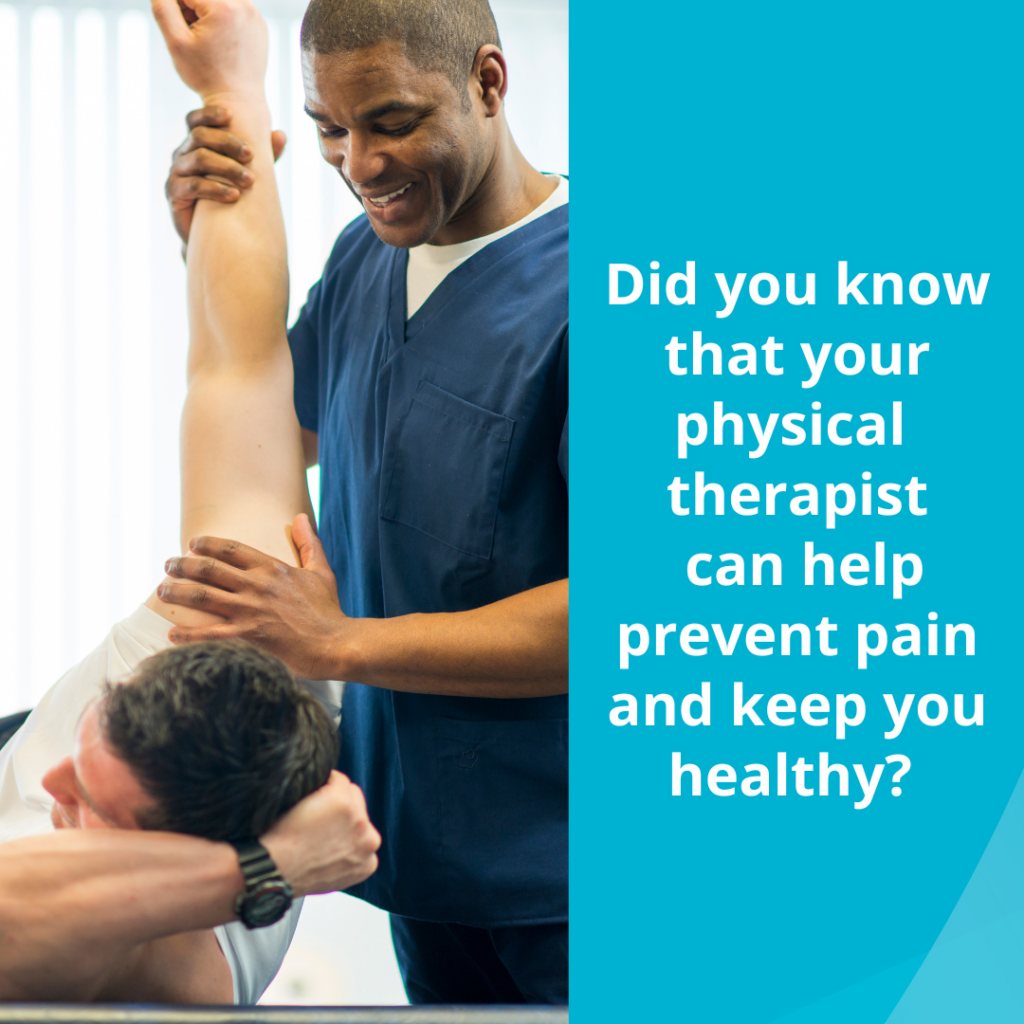
An annual PT exam is quick and easy. Your annual visit may include:

  • A history of your injuries, as well as a health history
  • Assessment of your strength, balance, flexibility, etc.
  • A review of your movement goals (do you want to run a marathon? Get on and off the floor easily playing with your grandkids?)
  • A review and update of your exercise program

How Important Is Moving Well?

There is strong evidence suggesting that movement is a valuable predictor of future health and resilience against disease. Moving well can keep you healthier and help you live longer.

Here are some examples of the power of movement when it comes to predicting future health:

Gait Velocity

Gait velocity is how fast you walk. Studies have shown that if your typical walking speed is over 1 m/s or 3.3 ft/s, you’re likely able to complete typical daily activities independently. You’re also less likely to be hospitalized and less likely to have adverse events like falls.

Get On and Off the Floor

A series of studies suggest that if you can go from standing to sitting on the floor and back to standing without using your hands, you’re a lot less likely to die than someone who can’t. It’s called the sitting-rising test. You can find the instructions and examples with a quick internet search.

Notice that both gait velocity and the sitting-rising test aren’t specific to any one thing. The risk of hospitalization in the gait velocity studies was hospitalization for any reason. Death in the sitting-rising studies was death from anything. So science says that moving well is incredibly important to your overall health. It’s also important for your quality of life.

We think moving well is just as important as your teeth, eyes, and taxes. If you agree, get that annual PT exam scheduled!

References

Physical Therapists’ Role in Prevention, Wellness, Fitness, Health Promotion, and Management of Disease and Disability – https://www.apta.org/apta-and-you/leadership-and-governance/policies/pt-role-advocacy


Ability to sit and rise from the floor is closely correlated with all-cause mortality risk — ScienceDaily

Gait velocity as a single predictor of adverse events in healthy seniors aged 75 years and older – PubMed (nih.gov)

October-2022-4
Don’t Keep Injury Secrets!

(used with permission from the APTA Private Practice Section)

You might be wondering who would keep an injury secret. The answer is – lots of people! The first thing that comes to your mind might be an athlete, like a football player, or maybe a baseball pitcher. But athletes aren’t the only ones that keep injury secrets. Performers like dancers keep injury secrets, and so do workers in all types of jobs. Why would anyone want to keep their injury secret instead of getting it treated and letting it heal? Read on…

Stigma

Don't Keep Injury Secrets!

Although there have been big improvements in the culture around sports, performing arts, and worker’s comp, some people still have the old “no pain, no gain” attitude. To some people, reporting an injury is an

 act of weakness, or a way of letting the team down. There can also be external pressure from coaches, parents, teammates, supervisors, or fans to keep playing or working.

Fear of Loss

With the focus on head injuries in recent years, athletes that get hit in the head know if they report concussion symptoms, they’re coming out of the game. Workers who get hurt on the job fear loss of pay, or loss of their job. Performers who get hurt might fear that their replacement will outshine them on the stage and take their place.

Competitive Advantage

While the first two reasons can apply to athletes, performers, workers and most any other group that might be hiding an injury, this one is limited to athletes. If an opposing team knows a player is injured, and what the injury is, they might be able to take advantage of it. For example, if a football team has a running quarterback that has an ankle injury, it will change how the opposing defense plays.

Competitive Advantage

These reasons all make some sense, but they’re also all shortsighted. Finishing a game, dancing tomorrow night, or working one more shift are never worth your long term health. Hiding a minor injury can turn it into a major one. It’s never weak to report an injury and you’re not letting your teammates, or coworkers down. If you’re not up to your best, you owe it to the people counting on you to let them know. Letting a healthy player, performer, or worker take your place is the right thing to do. If you’re injured, don’t hide it! Let the right people know, then go to the right person for help – your physical therapist!

August-2022-2
What Physical Therapy Can Do For Arthritis

(Used with permission from the American Physical Therapy Association Private Practice Section)

WHAT EXACTLY IS ARTHRITIS?

What Physical Therapy Can Do For Arthritis

Arthritis is a chronic condition that causes inflammation of the joints. It can cause pain, stiffness, and swelling. The hips, knees, hands, and spine are the most commonly affected joints. Arthritis is not a single disease but an umbrella term that includes a variety of different types. Some of the more common examples are osteoarthritis, rheumatoid arthritis, gout, psoriatic arthritis and ankylosing spondylitis.

RE-THINK YOUR TREATMENT While physical therapy might not be the first treatment you think of for arthritis, it probably should be. A lot of people with arthritis choose to use medication to manage their pain, stop activities that hurt, and wait for things to get bad enough to have a joint replacement. But this isn’t a great plan – all medications have side effects, even over the counter ones. Reducing activity leads to muscle atrophy and even stiffer joints. Even though joint replacement surgery usually has good outcomes, it does come with its own set of risks and a painful recovery.

WHY EXERCISE? Physical therapy has been extensively researched as a treatment for arthritis, and demonstrates good outcomes. Physical therapists typically start with exercise as the base for arthritis treatment. Exercise helps to regain lost joint motion, decrease feelings of stiffness, and strengthen muscles surrounding the affected joint. These benefits are all somewhat obvious.

What surprises many people is that exercise has been shown to be as effective as medication for pain relief in many types of arthritis, without the side effects.

WHAT ELSE CAN PT DO? Physical therapy has more to offer people with arthritis than just exercise though. Education helps people understand their condition, what to expect, and how to manage it. As experts in human movement, physical therapists are especially good at helping people modify the way they perform certain tasks or activities to reduce strain on joints affected by arthritis. They can also suggest ways to modify the environment at work or home to reduce pain and improve function. They may also suggest things like braces, orthotics, or other devices that can help maintain mobility and reduce pain. On top of all of that, PT has been proven to be a cost effective treatment, too.

TRY PT FIRST With so many techniques that are proven effective in helping people with arthritis, physical therapy is a recommended first line treatment for many types of arthritis. Now that you have a better understanding of what PT can do, hopefully you’ll think of PT first when you think of arthritis too.

References:

  1. Research (peer-reviewed)
    1. PT for juvenile RA – https://pubmed.ncbi.nlm.nih.gov/1946625/
    2. PT for hip and knee OA – https://pubmed.ncbi.nlm.nih.gov/33034560/
    3. Systematic Review for Juvenile RA – https://pubmed.ncbi.nlm.nih.gov/28729171/
  2. Articles and Content
    1. Effectiveness and Cost-Effectiveness of Physical Therapy for Knee Osteoarthritis-  https://www.rheumatology.org/About-Us/Newsroom/Press-Releases/ID/718
    2. Can physical therapy reduce arthritis pain? – https://www.medicalnewstoday.com/articles/physical-therapy-for-arthritis